FBE Teaching & Learning Symposium 2026
Experience for What? Reimagining Learning, Employability and Graduate Readiness
This year’s Symposium theme is experiential learning. Experience for What? Reimagining Learning, Employability and Graduate Readiness invites us to examine the critical role of experiential learning in business and economics education. As industries evolve, career pathways become less predictable, and graduates face increasing complexity, uncertainty, and technological disruption, traditional notions of employability are being challenged.
The symposium will explore how authentic, practice-based, and experiential learning can help students develop not only discipline knowledge but also the capabilities required to thrive in contemporary workplaces and society. Together, we will consider what experiences matter most, how we scaffold meaningful engagement with industry and communities, and how we enable students to develop professional identity, adaptability, judgment, and lifelong learning capabilities.
Through sharing innovative practices and evidence-informed approaches, we will examine how business educators can create learning experiences that prepare graduates not simply for their first job, but for careers that may not yet exist.
Date: Wednesday, 18 November 2026
Time: 9:30am – 5pm
Location: Room 4012, Level 4, The Spot (Building 110), University of Melbourne
Symposium Agenda | Time |
|---|---|
REGISTRATIONS | 9:30am – 9:45am |
WELCOMEProfessor David Pitt | 9:45am – 10:00am |
SESSION 1 – KEYNOTE PRESENTATION (Room 4012, The Spot)Student feedback know-how for experiential learning and beyond in the world of work | 10:00am – 11:00am |
MORNING TEA (Room 4018, The Spot) | 11:00am – 11:30am |
SESSION 2 – ROUNDTABLES (Room 6015, The Spot)Finance made visual: supporting first-time learners with MIRO, AI, and concept mapping AI-assisted rubrics & prompt design agent for assessment An AI-supported case-based smart platform for competition and merger analysis in economics teaching Making feedback useful before assessment When the lecture becomes an experience: Strategies for making lectures worth attending | 11:30am – 1:00pm |
LUNCH (Room 4018, The Spot) | 1:00pm – 1:45pm |
SESSION 3 - PANEL DISCUSSION (Room 4012, The Spot)Moderator: | 1:45pm – 2:45pm |
AFTERNOON TEA (Room 4018, The Spot) | 2:45pm – 3:00pm |
SESSION 4 – Faculty showcase: Experiential Learning in FBE (Room 4012, The Spot)Market simulation games for economics education AI-powered Financial Lab Relational authentic assessment: Teaching and assessing Professional Practice Linking news to accounting | 3:00pm – 4:30pm |
NETWORKING (Room 4018, The Spot) | 4:30pm – 5:00pm |
Keynote speaker

Professor Elizabeth Molloy
Professor Liz Molloy first joined the University of Melbourne as a lecturer in 2000 and has undertaken an extensive academic career spanning the University of Melbourne, Monash University, and even the Australian Athletics Team as Team Physiotherapist during the Commonwealth Games in Melbourne, Australia (2006). As an education researcher, Liz has been awarded more than $14 million in funding and has over 160 research publications on assessment, feedback, workplace learning and interdisciplinary education. She has been awarded University Teaching Excellence Prizes at both Monash and the University of Melbourne. Liz holds a Bachelor of Physiotherapy (Honours) and PhD (Health Professions Education) from the University of Melbourne, and in 2019 was awarded the Karolinska Fellowship Prize for Excellence in Medical Education Research in Stockholm, Sweden.
-
Experiential learning activities in the classroom, simulation context and as part of placements or internships present a wide range of feedback possibilities that can enhance learning. They can also limit opportunities for ‘traditional feedback’ that students have become accustomed to. In the workplace (and simulated workplace) there are often more opportunities for getting inputs from a variety of sources, but just how to access these opportunities can be seen as a skill in itself. In short, navigating feedback in workplace learning is tricky, and research has shown that across the disciplines there has been an under-conceptualisation of what this means, and how to best prepare learners to make the most of it in these complex settings.
This presentation focuses on how feedback can operate in experiential learning contexts, and introduces a framework (and some illustrative examples in practice) to guide students in managing feedback for themselves. This framework is anchored in theories of learning through experience, and in doing so, draws on what the learner can do before, during and after tasks to get the most out of feedback. This positioning contrasts with ‘the old view’ of feedback whereby teachers are seen as the central conductors (and sources) of feedback, particularly with respect to ‘what they tell’. The framework not only emphasises the importance of learners’ voice in feedback interactions, but also concerns itself with what the learner can do to orchestrate feedback processes. After all, ‘feedback know-how’ is an important part of the repertoire of any working person as they further their learning, beyond university graduation.
Invited speakers
-
Discover how FBE educators are bringing learning to life through authentic, applied, and technology-enhanced experiences. This session features four 15-minute showcase presentations highlighting innovative approaches to engaging students in real-world, experience-rich learning. Together, these examples demonstrate how experiential learning can deepen engagement, strengthen professional capabilities, and connect theory with practice.

Associate Professor Leslie Martin
Leslie Martin is an Associate Professor in the Department of Economics at the University of Melbourne. Leslie’s research lies at the intersection of environmental, energy, international development, and industrial organisation. She is the lead investigator of MEDAL, the Melbourne Environmental Data Analytics Lab, that uses frontier data analytics and a network of industry and government partnerships to design effective economic policy for the decarbonization of energy, transportation, and manufacturing and protection of forest and water systems. She is a recent recipient of the Australian Research Council’s Discovery Early Career Researcher Award and an associate editor at the Journal of Economic Behavior and Organisation. She has published in top journals in economics, including the Quarterly Journal of Economics, the American Economic Review, and the Review of Economics and Statistics.
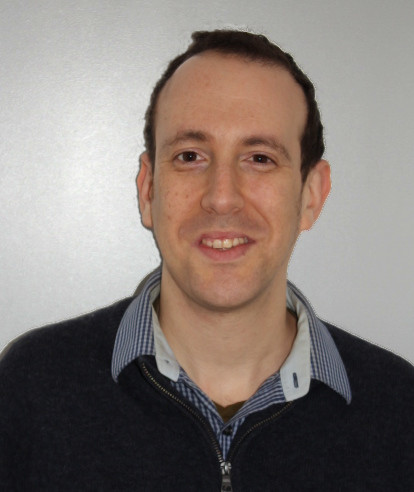
Assaf Dekel
Assaf Dekel is a Teaching Specialist in the Department of Finance under the Faculty of Business and Economics. He holds a Master of Commerce (Quantitative Finance & Business Statistics) from the University of Sydney, a Graduate Certificate in University Teaching (GCUT) from the University of Melbourne, a Postgraduate Diploma in Accounting, CPA and a Bachelor of Science in Computer Science. Mr. Dekel has extensive teaching experience across multiple disciplines, including finance, business statistics, management accounting, mathematics in business, computer science, and sustainable commerce.

Dr Natalie Le
Natalie joined the Department as a full time Teaching Specialist in 2024 after few years teaching as a sessional staff at the University of Melbourne, Monash University and some other Higher Education institutions in Melbourne. Her teaching focuses on corporate finance, investment and portfolio management, derivative securities, equity markets while her research interests are in securities market misconducts, corporate finance policies and decisions, effective curriculum and assessment design in the age of AI, teaching – learning and student employability. Prior to her academic career in Australia, Natalie worked for the Securities Commission in Vietnam where she was a senior policy analyst in securities market development and securities market supervision.

Dr George Panas
George Panas is a Senior Lecturer in the Department of Management and Marketing at the University of Melbourne.
After 25 years of senior management experience in industry and consulting, George transitioned to academia with the completion of his PhD in 2022. His areas of interest or specialisation include: e-commerce supply chains, supply chain and the UN SDGs, supply chain strategy & network design/optimisation, retail global sourcing & logistics, supply chain operations in Asia, international supply chain management, corporate strategy, financial planning and analysis, financial/Mathematical optimisation modelling & techniques, and supply chain commercial finance.
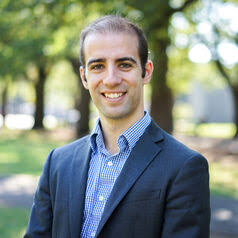
Dr James Kavourakis
James Kavourakis is a Senior Lecturer in the Department of Accounting at the University of Melbourne. He has several years' experience as an investment manager at a private investment fund and holds degrees in Law and Commerce with First Class Honours in Accounting from the University of Melbourne.
Date: 18 November 2026
Time: 9:30am – 4:30pm
Location: Room 4012, Level 4, The Spot (Building 110), University of Melbourne
Registration: Click here to register