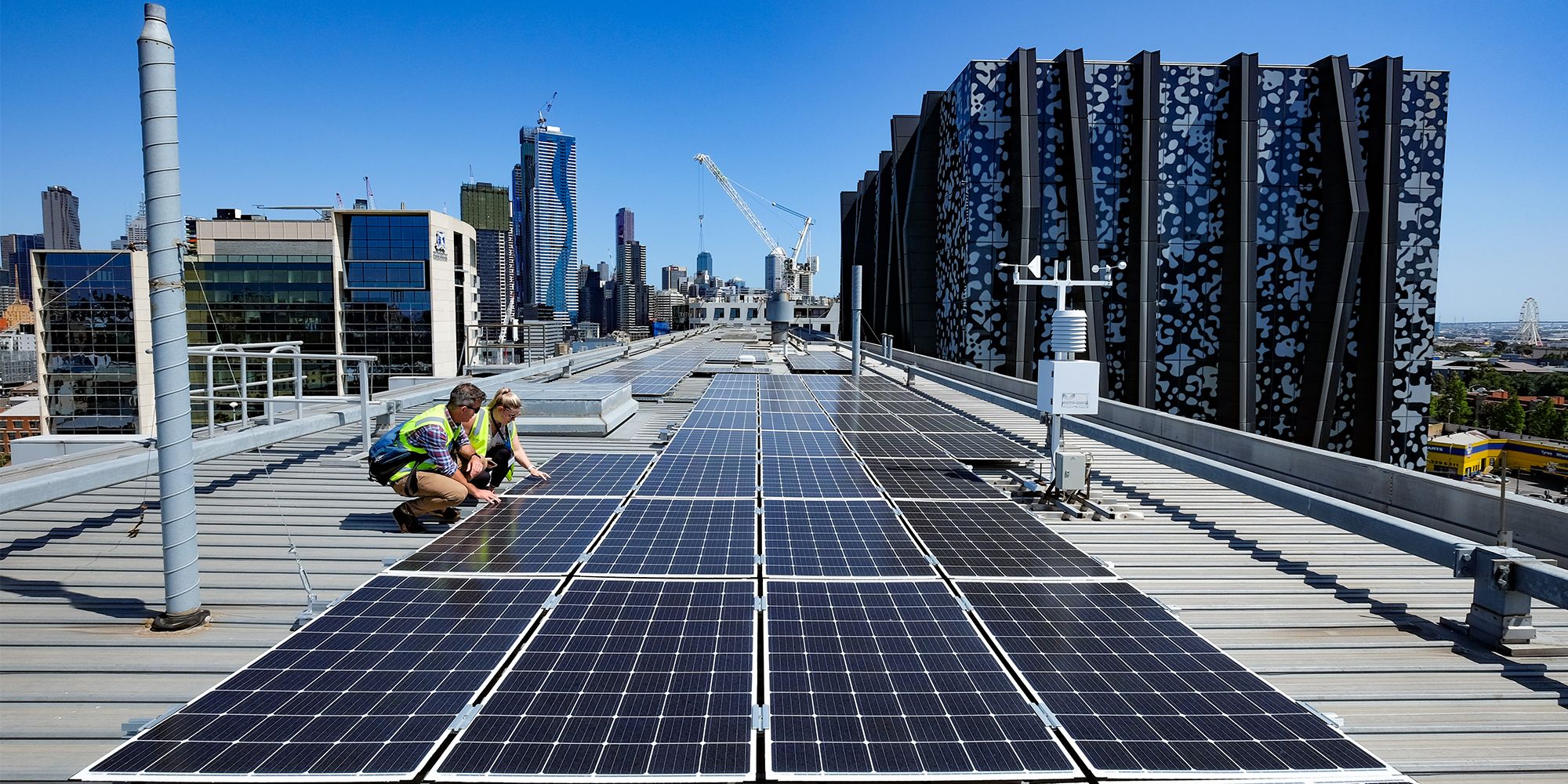
Economic activity has generated remarkable improvements in global living standards. But it also generates environmental and social costs that our current systems do not adequately address — from climate change and biodiversity loss to inequality and human rights violations. Researchers and educators in our Faculty are at the forefront of developing the ideas and evidence needed to transform how businesses and economies operate.
Researchers across our Faculty are grappling seriously with sustainability — understanding and measuring the impacts, designing better business models and incentives, and building the evidence base for lasting change. Our teaching aims to equip the next generation of professionals to implement these changes. We also recognise that we need to walk our talk, contributing to initiatives that improve our own impact upon people and the planet.
We encourage staff, students, and the community to engage with our sustainability initiatives, driving meaningful change at the University of Melbourne and beyond. We are contributing to the University's Sustainability Plan 2030, contributing to our equal 11th position in the global QS Sustainability Rankings. We are also a signatory to the UN's Principles of Responsible Management Education (PRME).
Our Commitments
The Faculty has elaborated on its commitment to sustainability through it Vision, Mission and Values.
FBE is a member of PRME, a global network engaging business and management schools to ensure they provide future leaders with the skills needed to balance economic and sustainability goals. The Faculty reports on our efforts to PRME every year.
The University's Sustainability Plan 2030 sets out the targets that define its sustainability strategy, and guide the Faculty's approach to sustainability.
Study Sustainability
This specialisation allows BCom students to select subjects related to the connection between commerce disciplines and environmental, social and economic sustainability challenges.
Provides graduates with the knowledge and training to integrate sustainability issues and frameworks into business considerations.
Hosted by the Faculty of Science, the OEP is integrates FBE subjects and offers others that will develop your knowledge and skills for professional practice in environment and sustainability.
The Wattle Fellowship is a sustainability leadership program that empowers students to develop the capabilities needed to create lasting, positive change in their communities and beyond.
Our Research
This Department of Economics research lab designs effective economic policy for the decarbonisation of energy, transportation, and manufacturing and the protection of forest and water system.
This research hub provides Department of Management & Marketing researchers with a platform to share and learn from each other, and to encourage cross-disciplinary research approaches to complex sustainability and climate problems.
An industry-focused research Institute at the Melbourne Business School for creating sustainable value in a world of transition and complexity.
There is a huge range of research happening across the University that works towards the United Nations’ Sustainable Development Goals.
Working with industry, government and not-for-profit organisations in Australia and internationally, they challenge current thinking and offer new solutions to change our world.
Our Research in Sustainability
-
Ugly produce: the problem and solution to food waste?
Researchers are finding links between political ideology and food consumption, making important contributions to research than can alleviate hunger and enhance sustainability.
-
Eliminating modern slavery from construction supply chains
New research by Dr Medo Pournader and her colleagues puts the construction industry in the spotlight, demonstrating the impact procurement managers can have on eliminating modern slavery.
-
Green transition: distinguishing the walk from the talk
Dr Shuang Chen's research examines the relationship between green marketing and investment behaviour, highlighting the impact of tightening regulations on the market.
-
Uncovering why consumers resist sustainability interventions
The transition to a sustainable, net zero society relies on dramatic shifts in consumer behaviour. This research on consumer attitudes provides valuable data for policymakers.
-
Supporting equality through the lens of caste
Professor Bapuji's research looks at the impact of the caste system on work and organisations, extending the field and broadening understanding of inequality in the workplace.
-
Improving investor confidence in renewable energy
This research is facilitating accurate pricing of wind derivatives, leading to stable revenues and increasing investor confidence in renewable energy projects.
Welcome from the Assistant Dean, Sustainability
As the Assistant Dean of Sustainability in the Faculty of Business and Economics, I am honoured to build on the Faculty’s strong commitment to leading the transformation of business and economic research and teaching towards a sustainable future. Business and economics are associated with serious environmental and social harms, such as climate change, nature loss and human rights, but are also seen as critical for driving our response to these issues. Our research and teaching are transforming how we address these issues and our Faculty is contributing to this transformation.
Given that sustainability issues contribute to anxiety about our future world, especially amongst younger generations, it is vital that our Faculty responds effectively. Our aim is for the Faculty to be a place where our staff, students and community feel that the frontiers of sustainable business and economics knowledge and solutions are being created and communicated, providing confidence in an environmentally, socially and economically sustainable future.
My colleagues in the Faculty are leading and contributing to numerous teaching and research initiatives that should provide this confidence in a sustainable future. Many of our students are engaged in social and environmental projects and initiatives, including through our student clubs. Their leadership and initiative never cease to impress me.
The University provides guidance on how we should integrate sustainability into our various activities through the targets set out in the Sustainability Plan 2030. We are also guided by peer networks such as the UN’s Principles for Responsible Education. We are committed to leading locally and globally, and to walking our talk on campus, towards a confident sustainable future.
A/Prof Ben Neville
Assistant Dean, Sustainability