Article Abstract
Change agents at various organizational levels engage in bottom-up change, which refers to upward, self-initiated, and communicative behaviors intended to improve their unit or the organization. Although these behaviors share core characteristics, research has been fragmented across the micro (e.g., voice and creativity), meso (e.g., issue-selling and whistleblowing), and macro (e.g., institutional entrepreneurship) communities. This fragmentation has led to inconsistent conceptualizations and theoretical confusion regarding what truly matters to bottom-up change success. To address these issues, we synthesize the disparate research traditions to identify key predictors of bottom-up change success, specifically distinguishing two types of success: endorsement (positive attitudes toward bottom-up change) and implementation (the realization of bottom-up change). We then theorize the relative importance of change agents’ human capital and social capital in predicting success in bottom-up change. Meta-analytic evidence from 105 studies (N = 33,186) reveals that although both human capital and social capital predict endorsement, social capital emerges as the dominant driver of implementation. Additionally, traditional indicators of human capital and social capital (i.e., rank, education, and work experience) are less predictive of endorsement and implementation than human or social capital themselves. By integrating previously fragmented literatures, we develop a comprehensive framework to guide future organizational research on bottom-up change success.
Organizational Behavior and Human Decision Processes, May 2026
About the researcher
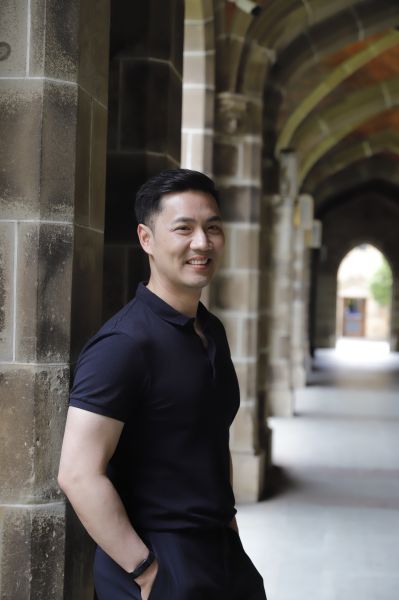
Andrew Yu (PhD) is an Associate Professor in the Department of Management & Marketing at the University of Melbourne, Australia. He received his doctorate in Organisational Behaviour and Human Resource Management (OB/HR) from the Eli Broad Graduate School of Management at Michigan State University, United States.
Professor Yu studies how people work together (and most of the time ... why they don’t do it that well) with a focus on how leadership, team dynamics, and organizational systems shape behaviors, decision-making, performance, and well-being. His research questions explores the real-world tensions leaders and team members navigate everyday: How do you drive high performance without burning people out? What helps diverse teams collaborate more effectively? How do our implicit biases shape everyday interactions? What encourages (and prevents) people from speaking up and what happens when they do? He has experience using various research methodologies, including quantitative (experiments, field surveys, secondary data, wearable sensor data) and qualitative (live observations, focus groups) methods.