Article Abstract
Research on the relationship between age and the work–family interface (WFI) is critical to effective human resource management. Yet, findings remain inconsistent and lack theoretical integration. We conducted a meta-analysis (k = 256, n = 186,109) integrating lifespan and life course perspectives to develop a model of the relationship between age and the WFI. Drawing on socio-emotional selectivity theory (SEST), a prevalent lifespan approach, results reveal a significant linear relationship between age and the WFI, with variation contingent on the construct and directionality. Age was negatively associated with work-to-family conflict, family-to-work conflict, and family-to-work enrichment, and positively associated with work-to-family enrichment and work–family balance. We integrated a life course view to examine how personal (gender, race, age cohort), situational (job, marital status), and contextual (national, global) factors moderate these relationships. Declines in work-to-family conflict with age occurred for men but not women, suggesting a widening gender gap for older compared to younger workers. The negative association between age and work-to-family conflict was stronger than for family-to-work conflict among older adults (over age 50 cohort) and professionals. Younger adult workers under 30 reported significant work-to-family conflict. The relationship between age and the WFI was significantly moderated by national (U.S., Non-U.S.) and global (Global North, Global South) contexts, with the strength of age-related patterns in work–family conflict varying by gender and job status. Our results highlight that future HRM studies and organizational practice should focus on advancing age-inclusive policies to better address the increasingly varied age and work–family relationships across many employee subgroups.
Human Resource Management, August 2025
About the researcher
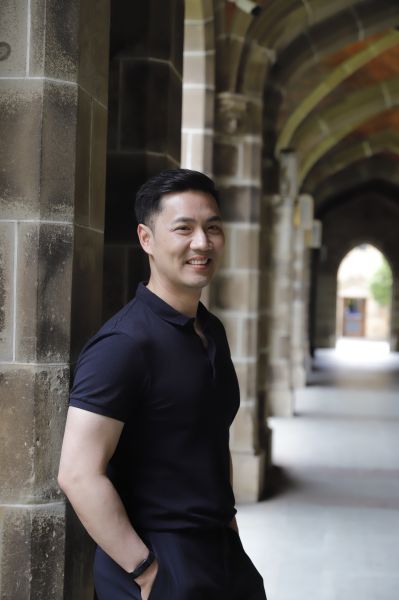
Andrew Yu is an Associate Professor in Organisational Behaviour and Human Resource Management and the co-Director of the Doctoral (PhD) Program for the Department of Management & Marketing at the University of Melbourne, Australia. A/Prof Yu's research focuses on understanding how people interact, collaborate, and make decisions at work. His research has covered topics including gender biases, diversity and inclusion, group and team dynamics, leadership, employee well-being, work-family issues, and job performance. He has experience using various research methodologies, including quantitative (experiments, field surveys, secondary data, wearable sensor data) and qualitative (live observations, focus groups) methods. He actively published in and serves as an Associate Editor and Editorial Board member for premier and leading journals in the disciplines of management, applied psychology, and human resource management, as ranked by the Financial Times Top 50 (FT50), the Chartered Association for Business Schools (ABS/AJG), and the Australian Business Deans Council (ABDC).