Tim Colebatch (1949–2024) and Constance Gepp (1911–1984)
Colebatch: BA Hon (1970), BCom (1979) Gepp: BCom (1933)
Constance Gepp and Tim Colebatch, two pioneering figures in Australian journalism, forged remarkable careers across decades—Gepp as Australia's first female finance journalist and trailblazer for women in business, and Colebatch as an esteemed economics editor known for his insightful reporting.
Journalists and Commerce graduates Constance Gepp and Tim Colebatch studied forty years apart, but both began their careers writing for local newspapers.
Gepp was a ‘stock and share’ expert, and the first woman finance journalist. She owned and managed businesses. In the 1960s, she was the first woman on the executive of the Stock Exchange of Melbourne and in Australia.
Colebatch was an esteemed award-winning journalist. He wrote for The Age for four decades, and from 1989, he spent twenty years as Economics Editor.
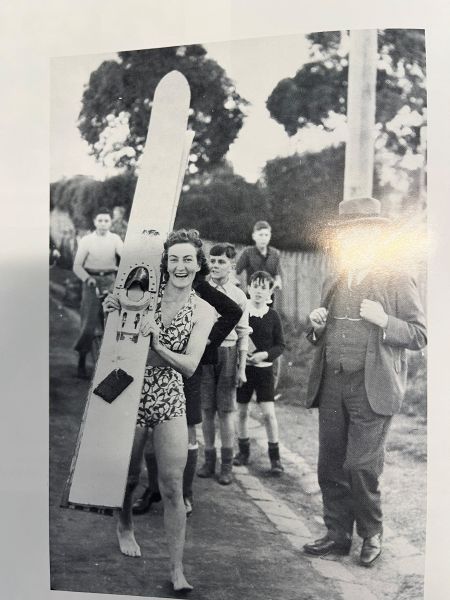
Constance Gepp (Wilson, Payne)
Constance Gepp and her sisters not only enjoyed the benefits of a privileged family, but made remarkable inroads into new careers for women throughout the twentieth century.
At the University of Melbourne, Gepp embraced social, sporting, acting, and fund-raising activities. She organised College, Commerce Faculty and Commencement Balls, and co-founded the University Ski Club.
First woman finance journalist
In 1933, after Gepp completed her Commerce degree, it was reported that she accompanied business leader Herbert Gepp, her father, on a pioneering government trade mission to China and Japan for five months. Through her social connections, community experiences, a Commerce degree and excellent writing skills, Constance found work as a finance writer for The Herald. In 1934, she was the first woman to work on the finance page of an Australian newspaper and was promoted to sub-editor by 1944.
A woman ahead of her time, Gepp owned a car and was one of few women with pilot’s and motorbike licences. She also volunteered in the Women’s Auxiliary Australian Air Force.
Gepp worked as an overseas correspondent in London during World War II, writing for The Herald and other papers. Through this work, she highlighted women’s work in the voluntary civil defence and army service and the hardships for mothers feeding families during the war.
Manager, public relations at the Stock Exchange (ASX today)
In 1968, Gepp broke more barriers when she joined the Stock Exchange of Melbourne as the Manager of Public Relations. Now going by Constance Wilson, she ran investment lecture courses for women wanting to learn about the stock market. These lectures proved so popular that men started attending, and earned Gepp a role presenting the share market broadcast, twice daily, on radio station 3AR.
In 1982, aged 71, Gepp wrote in the Who’s Who of Australian Women: "From experience, I would describe my business life as ‘a woman in a man’s world.’”

Tim Colebatch
Like Constance Gepp, Tim Colebatch was born into a family of high achievers. He followed his mother’s academic focus (Betty Colebatch-Hillier BA, BCom), graduating with a Bachelor of Arts (Honours). While still studying, Colebatch won a cadetship at The Age in 1971. He went on to study a Bachelor of Commerce degree with the Faculty of Business and Economics.
Seen as a rising star within a generation of young newspaper reporters, Colebatch was the masthead’s first journalist to cover the environment, and the youngest editorial writer. While often focused on politics and the economy, he also often wrote on another love: tennis. As part of The Age’s investigative team, Colebatch’s work helped shape the outcome of the 1982 state election with a series of stories on alleged land speculation and government corruption.
Politics, economics, statistics
By 1986, Colebatch took a post as Washington correspondent, allowing him to report on American elections. His command of electoral data gained him a reputation in electoral analysis. This led to a return home, and Colebatch spent the next 20 years in Canberra as The Age’s Economics Editor. Like Gepp, Colebatch had a talent for bringing dense information to the everyday reader, which helped him build a committed audience.
"My motto is that I don’t care who runs the country, but I care passionately about how it's run," he wrote in his final column for The Age after retiring in 2013.
"Our job is to sort truth from the spin, to help readers through the complexity of issues," he wrote.
The following year, Colebatch released a biography of former premier Sir Rupert Hamer, and in 2017 he won the Keith Dunstan Award as best columnist at the Melbourne Press Club Quill Awards.
Colebatch died in January 2024. In reflection, Patrick Elligett, editor of The Age, wrote that "Age readers, and indeed the wider Australian public, owe him gratitude for his services to democracy over several decades."
More stories
-
Tim Colebatch (1949–2024) and Constance Gepp (1911–1984)
Constance Gepp and Tim Colebatch, two pioneering figures in Australian journalism, forged remarkable careers across decades—Gepp as Australia's first female finance journalist and trailblazer for women in business, and Colebatch as an esteemed economics editor known for his insightful reporting.
-
Alex Dekker
In the midst of a global pandemic, 19-year-old Alex Dekker transformed a simple act of brotherly love into a thriving charity, Alex Makes Meals, which now delivers thousands of meals weekly to those in need.
-
Michael ‘Thunderbird’ Tan
For over thirty years, Michael Tan brightened the Faculty of Business and Economics with his infectious joy and dedication as an office porter, where he became a cherished member of the team, known for his friendly demeanor, lively conversations, and unwavering commitment to the university community.
-
Mary Wooldridge
Mary Wooldridge, head of the Workplace Gender Equality Agency, is on a mission to improve the lives of Australian families, blending her political experience with corporate leadership.