Betty Lawson (1920–2008) and Shirley Horne (1921–2007)
Lawson: Dip Com (1944), BCom (1967) Horne AM: BCom (1944), Dip Pub Policy (1971)
Shirley Horne and Betty Lawson faced career discrimination in public service, but they became community activists, leading the charge for equal pay and gender equity through their involvement in feminist and union organisations.
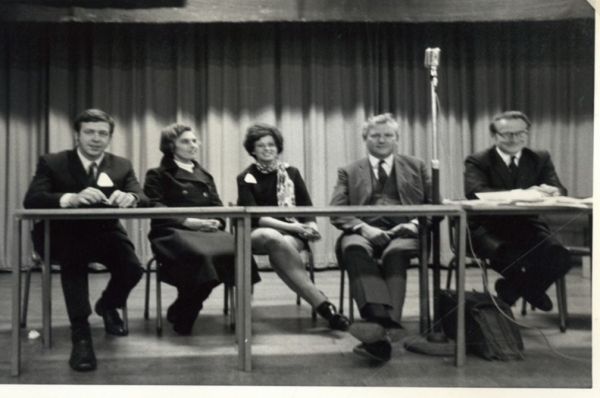
In the mid-twentieth century, married women like Shirley Horne and Betty Lawson faced discrimination that derailed their careers. Under government policies at the time, they were barred from permanent or promotional positions in public service until the 1960s.
Determined for themselves and others to be treated equally in workplaces, they became community activists, fighting for equal pay and other gender equity issues by taking up leadership roles in feminist and union organisations.
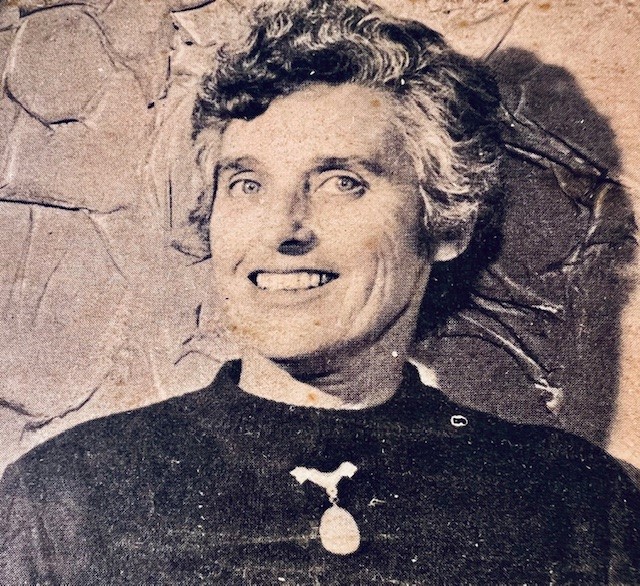
Betty Lawson
Early independence
Betty Lawson began her university studies in 1937, despite her father's belief that it was a waste of money. After marrying in 1942, she lost her financial support and had to switch to part-time studies, eventually earning a Diploma of Commerce while teaching on a temporary, low-paid contract.
The marriage bar was lifted in 1956 due to advocacy from the Temporary Teachers Club and the Victorian Teachers Union (VTU), but married women still faced unequal pay and benefits. Undeterred, Lawson continued her education while raising her children and earned her Bachelor of Commerce degree in 1967.
Teacher unionist
From 1961, Lawson represented women technical teachers on the VTU’s Executive, prioritising equal pay campaigning, which was at a stalemate. In 1967, she was elected as the Technical Teachers Association of Australia’s (TTAA) first woman president. Lawson’s leadership saw her gain national media attention at the TTAA’s annual conference in Queensland and Queensland’s teachers gained equal pay. Back home, Lawson became vice president of the Technical Teachers Union of Victoria (TTUV).
To gain publicity, Lawson, Hilma Cranley, the VTU’s president, and other community leaders organised the ‘Talk Out Equality for Women Conference’ in 1968. The National Council of Women Victoria, Business and Professional Women, the Victorian Secondary Teachers Association (VSTA), the Trades Hall Council, and 700 women attended. Future prime minister Bob Hawke was a key speaker. The teachers’ unions threatened strike action over equal pay and the government, just before Christmas, awarded equal pay.
The TTUV elected Lawson as their first woman president in 1968. Lawson led a delegation to the minister for education, claiming superannuation rights for married women teachers. But it would be 1982 before compulsory superannuation was granted for women public servants.
Pioneering principal
After a year as president, Lawson applied to be the principal of a technical school, leading to the first advertising of principal positions for 'men or women' in 1970. Despite initial setbacks, she became the first woman principal of a co-educational technical school at Sunshine North, challenging attitudes at the time by wearing trousers and encouraging women to pursue promotions.
During International Women’s Year in 1975, her leadership in women's employment and girls' education was celebrated, and she was invited by Premier Rupert Hamer to join the Equal Opportunity in Schools Committee in 1976. Lawson was inducted into the Victorian Government’s Women’s Register Honor Roll in 2003 for her pioneering contributions.
Shirley Horne
Research career
After earning her Bachelor of Commerce degree in 1944, Horne worked as a researcher in the Commonwealth Department of Social Service, where she was promoted and won a United Nations Travelling Fellowship to examine welfare systems in England and Scotland. Following her marriage, she was demoted due to policies against married women in permanent roles, leading her to pursue a career at the University of Melbourne, where she became a senior research fellow. In 1983, after the devastating ‘Ash Wednesday’ Fires, her report for the Bush Fire Appeal Trust transformed how future government crisis projects were handled.
Equal pay case (1969)
From the 1960s to the 1990s, Horne was an activist on local and national boards, using her statistical and qualitative research to advocate for equal pay. In 1969, she represented the National Council of Women Australia in an equal pay case before the Commonwealth Arbitration Commission, which initially ruled against women due to the sex-segregated workforce. Undeterred, Horne took another case to the Commission on behalf of the NCWA, and in 1974, a single adult minimum wage was conceded.
Leading and serving the community
Horne served on Victoria’s pioneering Equal Opportunity Board where, in 1979, she dealt with the landmark sex discrimination case of pilot Deborah Wardley versus Ansett Airlines. The Board found in Wardley’s favour, and the decision was upheld by the High Court. In 1981, Horne prepared a submission for a review of women’s representation in local government and became the first female chair of Graduate House at the University of Melbourne in 1987. Horne was awarded a Member of the Order of Australia (AM) "for service to the community, particularly the National Council of Women" in 1988. She was inducted into the Victorian Government’s Honour Roll of Women in 2004.
More stories
-
Dato Sri Mustapa Mohamed
Dato Sri Mustapa Mohamed has served as a key Malaysian minister, implementing impactful economic policies, promoting educational reforms, and enhancing Malaysia’s international trade relations, all while championing initiatives that have uplifted rural communities.
-
Danielle Wood
Danielle Wood is a trailblazing economist and the first woman to chair the Australian Government’s Productivity Commission.
-
Daniel Moorfield
In 2023, Daniel Moorfield transitioned from a successful 25-year career in executive roles to become the CEO of SecondBite, a not-for-profit organisation dedicated to rescuing food and combating hunger.
-
Sally Capp
Sally Capp AO is a groundbreaking leader whose tenure as Lord Mayor of Melbourne was marked by her response to the pandemic, where she led initiatives to support the homeless and launched the $300 million Melbourne Recovery Fund.