Katrina Alford
BA (1976), PhD (1982)
After helping bring change to the university as a student, Katrina Alford built an esteemed career using economics as a way of fighting for what she believes in.
With a deep understanding of how theory can analyse the real world, Alford has spent decades assessing inequalities throughout Australia and finding ways to alleviate them.
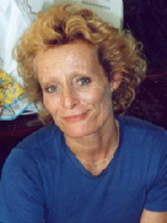
Katrina Alford was not yet an established economics professor when she was asked by a group of female staff at the University of Melbourne to help them present a case for equal pay.
She didn’t even have an undergraduate degree.
In fact, the women employed by the university were asking a third-year economics and economic history student to help take their case to an industry tribunal.
At 24, Alford had developed a reputation in just two years, both that she possessed a keen economic mind and was not one to back down from a fight.
Coming out of high school, she described herself as an “intellectual sticky beak.”
While she had started a Bachelor of Arts, she’d ended up in the Commerce and Economics building so often that she was intrigued by that world instead.
Women’s Working Group
As it still is today, the gender wage gap was front and centre on the national agenda in the 1970s.
In 1975, dubbed International Women's Year by the United Nations, the female administrative staff of the University were facing wages and career paths that were stagnant, and often receding, compared to their male colleagues.
Alford says that much of this came from a cultural and institutional view of 'women’s work' as limited to tasks like typing and filing, which were considered less valuable tasks in the workplace by male leadership.
In the face of this, the University’s Assembly formed the Women’s Working Group to advocate for female staff. In order to present the effect gender discrimination was having on campus, they needed evidence.
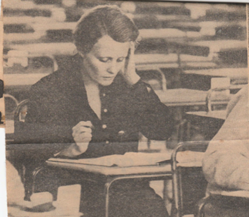
They enlisted Alford, still an undergraduate student, who worked with the Assembly and the Working Group to examine the standing of women in staff on campus – or as Alford puts it, ‘ammunition’.
By June, she’d written the Women’s Working Group Report (1975).
“It was wonderful to be able to make that contribution,” Alford said.
“Whatever I find interesting, I’ll go into bat for.”
The report was instrumental in securing the adoption of equal opportunity policies at the University – and earned her First Class Honours in her third-year Labour Economics subject.
The fight continues
After helping to organise change as an undergraduate, Alford wanted to continue using economics as a tool for social change.
She completed her BA in 1976, turning her attention to a PhD in economic history.
Her topic was an economic study and history of women in Australia from the arrival of Europeans to the mid-1850s.
In a time and area of study that was still relatively conservative, this did not always endear her to her peers.
“Gender was considered a boring topic,” she said.
Some colleagues told Alford that research of this nature, focusing on women’s economic history, was not befitting of close study.
This attitude extended far beyond those at the University.
As such, Alford’s PhD was the first of its kind, and was one of the first works of economic history that highlighted Australian women of the era.
Following her PhD, Alford became a Lecturer at the university in economics and economic history, followed by a Senior Research Fellowship in the university’s Faculty of Medicine.
These include several reports to federal parliamentary committees, the National Press Club and the Guardian Weekly, which often brewed spirited debate.
Commitment to advocacy
Alford’s inclination to use her economic knowledge to highlight inequalities in social and economic affairs has not changed since she was a student.
Her main research aim has been to apply economic analysis to social, economic and health issues, including policy reform in healthcare and education to improve the wellbeing of Indigenous Australians.
Fundamentally, she says, it comes back to her academic mindset.
Economics allows you to visualise a society and build an understanding. You can then analyse all aspects of it.
Katrina Alford
More stories
-
Dato Sri Mustapa Mohamed
Dato Sri Mustapa Mohamed has served as a key Malaysian minister, implementing impactful economic policies, promoting educational reforms, and enhancing Malaysia’s international trade relations, all while championing initiatives that have uplifted rural communities.
-
Elizabeth Muriel ‘Betty’ Lawson (1920–2008)
Betty Lawson is revered as one of Victoria’s leading advocates for teachers in the state.
-
Harriett Amies (1907–2006), Jean Polglaze (1911–1978), Jean Kerr (1922–2013)
Harriett Amies, Jean Polglaze, and Jean Kerr were trailblazing women in commerce whose influential contributions to business and academia in the twentieth century paved the way for future generations of female leaders.
-
Hugh Morgan
Hugh Morgan AC has had a diverse career spanning the mining industry, equities, and various leadership roles.