Harriett Amies (1907–2006), Jean Polglaze (1911–1978), Jean Kerr (1922–2013)
Amies: BCom (1928), Polglaze MBE BCom (1932), MCom (1936), Kerr: BCom (1943), MCom Columbia (1956)
Harriett Amies, Jean Polglaze, and Jean Kerr were trailblazing women in commerce whose influential contributions to business and academia in the twentieth century paved the way for future generations of female leaders.
Harriett Amies, Jean Polglaze and Jean Kerr were early commerce graduates and, between them, impacted business, academia and community organisations in the twentieth century.
Harriett Amies
Harriet Amies was one of the first two women to graduate with a Bachelor of Commerce (BCom) from the new Faculty of Commerce in 1928. The other, Eileen O’Reilly, became a teacher. Amies was one of the 325 first commerce students in 1925, who were mostly men and studied part-time. She was the first woman to graduate with a major in Accountancy.
It was the Depression era when Amies graduated and she found that jobs were scarce, especially for women. Like O’Reilly, Amies studied a Diploma of Education with the aim of taking up work as a teacher. Amies taught commercial subjects, typing and shorthand, at Clarendon Girls School for nearly eight years. Leaving teaching, she worked in her first accounting role as the school bursar at Presbyterian Ladies College, for four years.
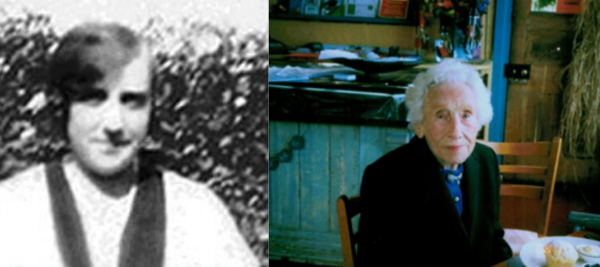
Amies had studied further accounting qualifications and, in 1933, qualified as a ‘Licentiate’ member of the Commonwealth Institute of Accountants (CIA), Australia’s largest accounting body. Though a handful of women had gained membership, Amies was almost certainly the first woman to qualify as an accountant largely via university studies. In 1952, she joined the Australian Society of Accountants (ASA).
Enlisting in the Australian Women’s Army Service in 1943, Amies was automatically a member of the Australian Military Forces. Serving for three years, she quickly rose in the ranks to Lieutenant and Acting Captain. Her responsibilities, after completing her ordnance course, were in major inventory management of weapons and ammunition, their storage and issue. Retiring from business in 1969, she stayed on the Special List for ASA members and remaining part of the profession for another 20 years. She performed occasional finance work until her retirement at 82. Amies died in 2006, aged 99.
Jean Polglaze
Jean Polglaze, an economist, academic and statistician, was an early commerce student who became one of the Faculty’s most influential figures. She graduated with a Bachelor of Commerce in 1932 and was awarded a Kilmany Scholarship and a Rockefeller Fellowship for Cambridge University.

The media were enamoured when she was celebrated as the first woman in Australia to gain a Master of Commerce (MCom) in 1936. With her inspirational teaching and leadership, she impacted the development of Melbourne University’s Department of Economics over a 30-year period, often serving as a role model to women students.
In 1934, Polglaze co-authored a paper with Eileen Heath composing a business index for Australia. It was the first time a paper authored by two women was published in the Economic Society of Australia’s journal, The Economic Record. In 1937, Sir Douglas Copland, Founding Dean of the Commerce Faculty, sent Polglaze to Columbia University and the Brookings Institute to qualify her for a lectureship in statistics, a new position. She returned home in 1939, taking up a post as the Foundation Lecturer in Statistical Method. Polglaze controlled the statistics subject for nearly 40 years, until her retirement in 1977.
During World War II, Polglaze was appointed as part-time head of the new statistical section in the Australian Government’s Department of Defence Co-ordination. For her wartime services, she was made a Member of the British Empire.
After the war, Polglaze was appointed Senior Lecturer in the Faculty’s new Department of Economics. When she was promoted to Associate Professor in 1953, the media again highlighted her achievement. Polglaze also served as Sub-Dean of the Faculty of Economics and Commerce, Acting Head of the Department of Economics, and in numerous university, faculty, and departmental committees, including as first woman president of the University’s staff club.
An obituary in 1978, authored by Emeritus Professor John Nieuwenhuizen, credited Polglaze with ensuring Melbourne’s long pre-eminence in its production of Australian economists. In the days when few women progressed to Honours, several of her women students became Chair of Economics or gained other leadership roles.
Her name lives on in the Faculty of Business and Economics with four Jean Polglaze Memorial Prizes.
Jean Kerr
Jean Kerr was the first woman to hold a full-time lectureship in accounting in an Australian university and was a highly respected member of the faculty from 1946 to 1982.
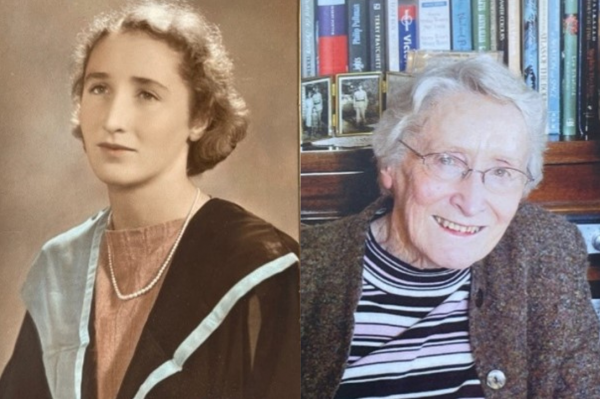
She enrolled in the BCom degree in 1939. Before joining the university staff, she worked for five years as an accountant for McPhersons Ltd.
To meet the increase in teaching loads with the influx of ex-servicemen to the University, Kerr was invited by the Dean in 1946 to accept a temporary position as a lecturer. The lectureship was soon made permanent, and in 1954 she took sabbatical leave to undertake a masters degree at Columbia University in New York. A paper arising from her Columbia study, ‘Three concepts of business income’ (1956), earned her international acclaim. Published in The Australian Accountant in 1956, it was one of the most widely cited and reproduced articles of its time. Promotion to senior lectureship followed in 1957, and to reader in 1968.
Kerr was an important contributor to the development of accounting as an academic discipline and as a profession. She was the honorary assistant secretary of the Economic Society (1957–62) and its auditor (1964–75). A member of the Faculty's Executive and Budgets Committee for most of the 1970s, she was Associate Dean (Budget) from 1973 to 1975. On occasion, Kerr was Acting Professor of Accounting. She retired from the university on her 60th birthday, when she was the nation’s most senior accounting academic.
In her retirement, she was invited by the Australian Accounting Research Foundation to provide a paper on ‘liabilities’. It served as the basis for the prestigious CPA Australia/University of Melbourne Annual Research Lecture, which she delivered in 1985.
Jean Kerr died in 2013. The Faculty’s obituary paid tribute to her, highlighting that former colleagues and students remembered her as “an inspiring teacher, a scholar of international reputation, and a gracious lady.”
More stories
-
Peter Gunn
Peter Gunn AM revolutionised freight logistics in Australia and is known for his philanthropic efforts through the Rae & Peter Gunn Family Foundation.
-
Meredith Edwards
Emeritus Professor Meredith Edwards, a pioneering economist dedicated to women's issues and social justice, has made significant contributions to Australian policy and academia throughout her distinguished career.
-
Dato Sri Mustapa Mohamed
Dato Sri Mustapa Mohamed has served as a key Malaysian minister, implementing impactful economic policies, promoting educational reforms, and enhancing Malaysia’s international trade relations, all while championing initiatives that have uplifted rural communities.
-
Max Corden (1927–2023)
Max Corden AC left a lasting legacy in academia and economic policy. He tackled major real-world issues, initially focusing on protection and trade policy, then addressing unemployment and inflation.