Business Education Advancement Conference: BEACON 2026
Tuesday 9 June 2026
Business Education Advancement Conference: BEACON 2026
The Faculty of Business & Economics will hold the inaugural Business Education Advancement Conference (BEACON) on 9 June 2026.
The conference is jointly organised by the Williams Centre for Learning Advancement and each of the four FBE teaching departments: Accounting, Economics, Finance and Management & Marketing. Designed to highlight excellent and emerging educational practices in the Faculty, it will provide an opportunity to come together to share and showcase initiatives, projects, techniques and challenges across a wide range of teaching and learning topics. Submissions are welcome from both experienced presenters and colleagues wishing to share emerging practice or work in progress.
We are excited to announce that Amanda White will be our closing keynote speaker. Amanda is Associate Professor in Accounting at UTS Business School, where she has spent two decades experimenting relentlessly in the classroom – edtech, open textbooks, care as a strategy, peer mentoring and social media to name a few. Her commitment to student learning has been recognised with an AAUT Teaching Excellence Award and an OAM. Find her on Instagram as Amanda Loves to Audit.
Please see below for details of her featured talk:
The Long Game: Building Recognition and Impact as an Education-Focused Academic
Abstract: What does it mean to build a successful academic career when your passion is teaching, not grant capture? Associate Professor Amanda White OAM has spent two decades doing exactly that - navigating a research-dominant system while building a career that she's genuinely proud of. In this closing keynote, Amanda draws on her journey from PricewaterhouseCoopers to the UTS Business School to explore how education-focused academics can define their contribution on their own terms, demonstrate impact in ways that institutional structures actually recognise, and build careers that don't require apologising for caring about students. She'll leave you with practical suggestions for measuring and communicating educational impact, because "I'm a great teacher" is not enough, but it's also not nothing.
Key dates
- Call for Abstracts: Thursday 2 April 2026
- Abstract submission deadline: Monday 4 May 2026
- Feedback and outcome: Mid May 2026
- Conference date: Tuesday 9 June 2026
| Time | Session | |||
|---|---|---|---|---|
| 9:30am-10:00am | Level 2 Foyer, FBE building (111 Barry st) Registration | |||
| 10:00am-10:30am | FBE Room 205 Acknowledgement of Country, Prof William Ho Opening address, Prof David Pitt | |||
| Parallel sessions 1 | ||||
| FBE Room 209 | FBE Room 213 | FBE Room 214 | FBE Room 219 | |
| Session Chairs | Gab Corbo-Perkins | Mehmet Ozmen | Michelle Sabe | Maggie Singorahardjo |
| 10:30am-10:45am | Sean Pinder, Miriam Edwards A Proactive Approach to Academic Adjustment Plans Within a Large Cohort | Matt Dyki Increasing engagement with the online component of blended learning using interactive video | Natalie Le, Assaf Dekel From Models to Markets: AI-Assisted Financial Simulators for Experiential Learning in Quantitative Finance | Li Xie-Carson Embedding Employability in Higher Education: Insights from Finance Academics in Australia |
| 10:45am-11:00am | Danny Burton An Integrated approach to teaching Legal Issues for Business | Chris Woods AI‑Augmented Feedback for Sustainable Assessment in Work‑Integrated Learning: A Practice Case from a Business Internship Subject | Assaf Dekel, Natalie Le From Models to Markets: Building Interactive Finance Simulators with Generative AI for Large Classes | Peter Matheis, Li Xie-Carson Designing a Simulated WIL Experience: Integrating Portfolio-Based Assessment for Coherent and Iterative Learning |
| 11:00am-11:30am | Morning tea break | |||
| Parallel sessions 2 | ||||
| FBE Room 209 | FBE Room 213 | FBE Room 214 | FBE Room 219 | |
| Session Chairs | Gab Corbo-Perkins | Mehmet Ozmen | Michelle Sabe | Maggie Singorahardjo |
| 11:30am-12:00pm | Wasana Karunarthne Identifying and Supporting At-Risk Students in Large, Diverse Classes: A Data-Informed Approach to Inclusive Teaching | Eugene Skewes, André Sammartino Designing Personalised Business Case Studies with Generative AI: Narratives, Artefacts and Applied Learning | James Kavourakis Building industry-relevant skills in the (virtual) classroom | Andrew Zur Make the Thinking Hard, Not the Task: Redesigning First-Year Assessment for Clarity, Integrity, and Analytical Development |
| 12:00pm-12:30pm | David Christie, Nick Sharman, Stefan Filippo Evaluating and Enhancing Tutorial Teaching: Evidence from a Large-Scale Observation Program | Linh Nguyen Preparing Finance Graduates for an AI-Augmented Industry: Embedding Responsible GenAI for Critical Thinking and Ethical Practice | John Clements Assessing development of employability skills | Maurice McCourt, Miriam Edwards Exploiting Diversity in Finance Groupwork: Algorithmic Team Formation and Student Outcomes |
| 12:30pm-1:00pm | Mark Jones Think tank session: Decolonising and Indigenising Business Education: You Can Ask That! | Svetlana Danilkina, Collin Li Quicker and/or better? Assessment design for AI-assisted marking in Gradescope | Emma Power, George Panas Beyond Internships: A Framework for Expanding Work-Integrated and Industry-Relevant Learning | Peter Matheis Adaptive Learning Design: A Taxonomy of Pedagogical Delivery Configurations |
| 1:00pm-2:00pm | Lunch break | |||
| Parallel sessions 3 | ||||
| FBE Room 209 | FBE Room 213 | FBE Room 214 | FBE Room 219 | |
| Session Chairs | Evonne Irwin | Emma Power | Tracy Zhou | Alan Horsfall |
| 2:00pm-2:30pm | Tom Whitford The Melbourne Dialogic Method (MDM): A Scalable Framework for Secure, Authentic Oral Assessment in Business Education | Teagan Altschwager, Eugene Skewes, Emma Power, Aman Ullah What’s the right blend? Identifying delivery models and design features that support student engagement, learning and belonging in blended learning | Silvia Zia, Nafisa Ovi Student Engagement in the Age of GenAI: Preserving Authenticity and Agency through Process‑Driven Assessment in Business Education | Tao Sun Secure and Authentic Assessment at Scale in an Econometrics Capstone Subject |
| 2:30pm-3:00pm | Farzan Fallahi, Tom Whitford, Bessie Zhang Implementing IOA at Scale: Early Lessons from the Melbourne Dialogic Method (MDM) | David Christie, Joshua Miller, Cameron Low, Lavinia Gotovan, Pablo Ahumada Designing Interactive Tutorials: Lessons from a Flipped Classroom Implementation | Sumedha Weerasekara Think tank session: Restoring Depth: Rethinking Assessment in the Age of Generative AI | Nahid Khan, Chin Yong Quek Think tank session: Assessment at Scale: Navigating the Integrity-Consistency-Authenticity Trilemma |
| 3:00pm-3:30pm | Afternoon tea break | |||
| Parallel session 4 | ||||
| FBE Room 209 | FBE Room 213 | FBE Room 214 | FBE Room 219 | |
| Session Chairs | Evonne Irwin | Emma Power | Tracy Zhou | Alan Horsfall |
| 3:30pm-4:00pm | Bessie Zhang, Tom Whitford, Andrew Yu Making Reflection Speak: Authentic Assessment in a GenAI-Rich Learning Environment | Teagan Altschwager, Pru Burns ‘Levelling up’: Tips and tricks for getting started with media content creation | Mehmet Ozmen, Laura Dooley, Amber Willems-Jones, Claudia Rivera Munoz, Abi Brooker Tracing the diffusion of teaching innovations: Dissemination strategies, reach, and enabling conditions | Chris Woods Think tank session: Cyborg Pedagogy and Postplagiarism in Business Education |
| 4:00pm-4:30pm | Keynote address, A/Prof Amanda White, UTS The Long Game: Building Recognition and Impact as an Education-Focused Academic | |||
Keynote speaker
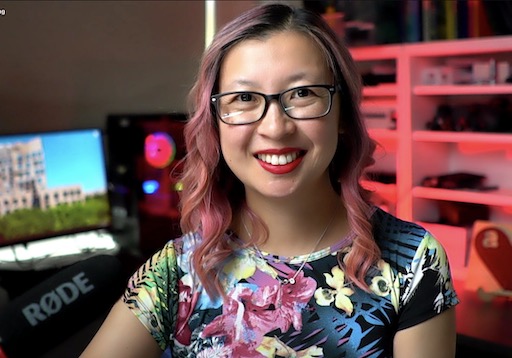
Associate Professor Amanda White
Amanda is Associate Professor in Accounting at UTS Business School, where she has spent two decades experimenting relentlessly in the classroom – edtech, open textbooks, care as a strategy, peer mentoring and social media to name a few. Her commitment to student learning has been recognised with an AAUT Teaching Excellence Award and an OAM. Find her on Instagram as Amanda Loves to Audit.
-
What does it mean to build a successful academic career when your passion is teaching, not grant capture? Associate Professor Amanda White OAM has spent two decades doing exactly that - navigating a research-dominant system while building a career that she's genuinely proud of. In this closing keynote, Amanda draws on her journey from PricewaterhouseCoopers to the UTS Business School to explore how education-focused academics can define their contribution on their own terms, demonstrate impact in ways that institutional structures actually recognise, and build careers that don't require apologising for caring about students. She'll leave you with practical suggestions for measuring and communicating educational impact, because "I'm a great teacher" is not enough, but it's also not nothing.
Call for abstracts
The Faculty of Business & Economics invites you to submit an abstract to the inaugural Business Education Advancement Conference, BEACON 2026.
The conference is jointly organised by the Williams Centre for Learning Advancement and each of the four FBE teaching departments: Accounting, Economics, Finance and Management & Marketing. Designed to highlight excellent and emerging educational practices in the Faculty, it will provide an opportunity to come together to share and showcase initiatives, projects, techniques and challenges across a wide range of teaching and learning topics. Submissions are welcome from both experienced presenters and colleagues wishing to share emerging practice or work in progress.
Key dates
- Call for Abstracts: Thursday 2 April 2026
- Abstract submission deadline: Monday 4 May 2026
- Feedback and outcome: Mid May 2026
- Conference date: Tuesday 9 June 2026
Conference themes
We invite abstracts from across the following broad teaching and learning themes (noting that multiple abstract submissions are permitted):
- GenAI
- Technology and Delivery mode
- Assessment and Feedback
- Inclusive teaching
- Employability, Industry Engagement and Experiential Learning
- Other
Presentation types
You are invited to submit an abstract for:
- A long presentation (20 min + 10 min Q&A)
- A short presentation (10 min + 5 min Q&A)
- Leading a ‘think tank’ conversation (30 min)
Presentations can cover (but are not limited to):
- SoTL works-in-progress or completed projects
- Evidence-based teaching interventions and practices
- Hints and tips for the classroom
- Showcasing a teaching innovation or practice
- Teaching and Learning question or problem (for a Think Tank conversation)
Abstract guidelines
-
Word count: 150–300 words
What to include:
- Context
- Aim
- Conceptual or theoretical approach
- Project description (methods, etc.) or Intervention/practice description
- Key findings and/or contribution
Example abstract
Concerns about academic integrity and the limitations of written assessment in AI-rich environments have prompted renewed interest in authentic, dialogic assessment approaches (Bearman et al., 2022; TEQSA, 2023). This presentation reports on a project investigating the implementation of an interactive oral assessment (IOA) in a third-year economics subject. The project examined the IOA’s effectiveness in assessing conceptual understanding and disciplinary reasoning. The study is informed by theories of authentic assessment and evaluative judgement, emphasising alignment with real-world practice and students’ capacity to demonstrate and justify knowledge (Boud & Falchikov, 2006; Tai et al., 2018). A mixed-methods design was employed, combining analysis of student performance data with survey responses and semi-structured interviews to capture both outcomes and student experiences. Preliminary findings indicate that IOAs enhance depth of understanding and provide more valid insights into student learning, while raising challenges related to anxiety, scalability, and assessor consistency. The project contributes an evidence-informed model for implementing IOAs in large, discipline-specific contexts.
-
Word count: 150–300 words
What to include:
- Context/teaching challenge
- Description of innovation or practice
- Insights or observations
- Key takeaways
Example abstract
Large undergraduate business courses often struggle to balance authentic assessment with scalability. At the same time, the increasing availability of generative AI tools has prompted renewed attention to assessment design that emphasises student reasoning and disciplinary thinking. This presentation showcases the introduction of interactive oral assessments in a third-year management subject at an Australian research-intensive university. Students complete a short recorded oral response explaining and applying course concepts to a case scenario. The activity was implemented using an asynchronous video platform integrated with the LMS. Early implementation highlighted several benefits, including increased visibility of student reasoning and greater opportunities for formative feedback. However, the approach also raised practical considerations related to student preparation, marking workload, and technological confidence. The session will share the design rationale, implementation process, and practical lessons learned. Participants will gain concrete strategies for introducing scalable oral assessment activities and for using short video responses to strengthen conceptual understanding in large classes.
-
Think Tank conversations are interactive, discussion-led sessions designed to explore a teaching and learning question, challenge, or emerging issue with participants.
Word count: up to 150 words
What to include:
- Context/rationale
- Topic
- ‘Thought starter’ question(s)
- Brief description of techniques you will use to encourage participant engagement in the discussion
Example Abstract
Across business education, many effective teaching ideas remain local rather than becoming embedded more widely. This Think Tank explores why some innovations travel across subjects, programs, and departments while others do not. It is designed for colleagues interested in dissemination, leadership, and sustainable educational change. Discussion will be guided by three questions: What helps teaching innovations gain traction beyond the original classroom? What institutional barriers most commonly slow adoption? What kinds of leadership, support, and visibility make diffusion more likely? The session will use a brief framing activity, table discussions, and a collective mapping of barriers and enablers. Participants will be invited to contribute examples from their own contexts and to identify practical actions that faculty and departments can take to support wider uptake of effective teaching practices.
Abstract submission
Abstracts can be submitted via this link: BEACON 2026 – Fill out form.
If you are submitting more than one abstract, please submit separate forms for each submission.