The landscape of student support within the Faculty of Business and Economics (FBE) has shifted over the years, from a predominantly transactional relationship to a more holistic, comprehensive approach. These changes have been largely driven by changing demographics, societal shifts, and global events.
Historically, student support at universities was often minimal, focusing primarily on academic achievement. However, as awareness of engagement, student wellbeing and the factors that contribute to academic success has grown, the Faculty of Business and Economics has embraced a broader definition of student support.
These changes began when services like counselling and psychological support started to become integral parts of university life. This shift coincided with increasing recognition of the need for students to feel a sense of belonging.
Diversity and inclusion
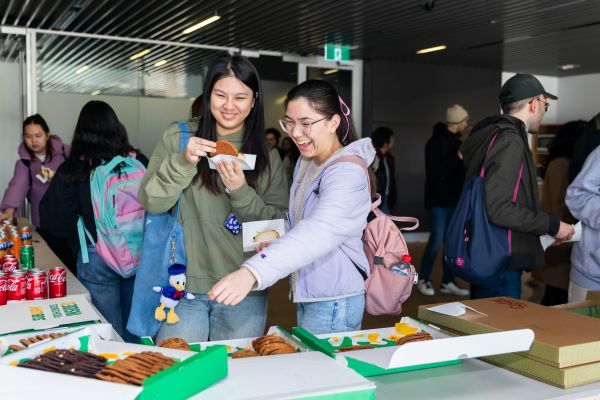
In recent years, the Faculty has made concerted efforts to create an inclusive environment for a diverse student body, including first-generation university students, Indigenous students, those from rural and regional areas, and international students.
Ewan Evans, FBE Director of Student and Academic Services, notes that it is essential to demystify the experience and actively promote available support services, particularly for students who lack familiarity with university life.
“We have to make sure our programs are designed to help with that transition for a diverse cohort of students,” he says. “Students who have a strong foundation of belonging and connection achieve higher grades, are less likely to leave, and are more resilient when facing inevitable hurdles over assessment and exams.”
This focus on diversity has led to initiatives designed to foster connections among students, helping them build networks and find their place within the University of Melbourne community.
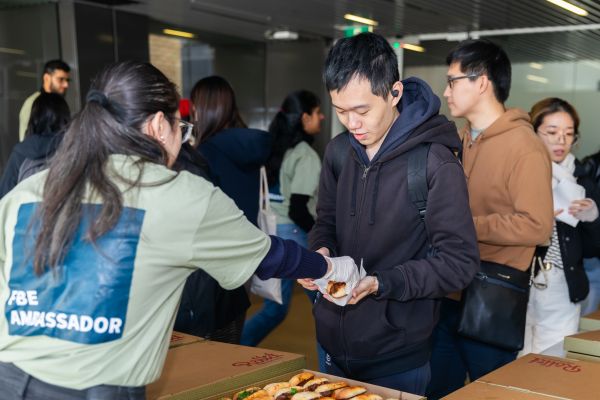
Programs such as peer mentoring, orientation activities, brunches and intercultural fairs have been developed to ensure that all students, regardless of their background, have the resources they need to succeed. In addition, FBE is home to 25 student-led clubs and societies that play a significant role in connecting students through a wide range of programs and events. Along with strong representation of student ambassadors, through embedding student voice in the evolution of student engagement practices, FBE students contribute to a flourishing campus community.
“Now more than ever there’s more of an expectation of a university as a hub, or a home, something that not only teaches its students but also looks after them,” Evans says.
Responding to the pandemic
The COVID-19 pandemic significantly affected student support systems and fundamentally changed how support is delivered.
“For student services, it really was a bit of a sprint to try and keep things going,” Evans says.
“If one of our key goals is to build connection to peers, how do you do that in an online space where you’re seeing, for example, in a lot of tutorials they wouldn’t have their cameras on?”
FBE prioritised outreach initiatives, creating digital opportunities to ensure that students continued to receive the support they needed while adjusting to hybrid learning environments.

Today, ongoing economic challenges have led the University of Melbourne to implement programs such as food banks and support programs to assist students in need.
Employability and developing skills
Another change in student support has been the increasing emphasis on employability. Evans says that today’s students often expect not just to learn but also to develop practical skills to graduate job-ready.
This has led to initiatives such as case competitions, networking events, and partnerships with industry, aimed at providing students with real-world experience and insights into their future careers.
Students now prioritise job outcomes alongside academic success, which has prompted a major cultural shift that has seen employability pushed to the forefront of a student’s educational experience.
Evans points to an example called WorkHub, currently in its pilot phase, where students work with organisations on campus to gain work experience. This opportunity is accessible to all students, including those who may face additional challenges in sourcing, participating in, or travelling to traditional work placements.
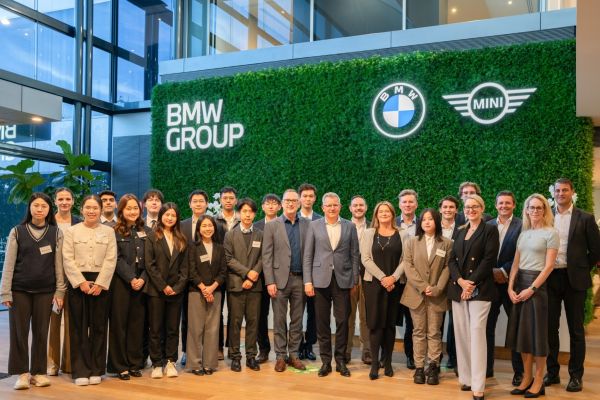
“WorkHub is an office environment created in the heart of the Faculty, where you have your desks, you have your meeting rooms and that’s on site. The students go in there and work with a real company, on a real project.”
So far, 56 students have participated and have gained work experience with industry partners including BMW and the Kinaway Chamber of Commerce.
A range of new clients, including London Stock Exchange Group, Qatar Airways, UniSuper and Altiorem will support internships in summer 2024–2025, with places for 87 students on 16 different projects.
Evans notes the importance of student voices in shaping these programs, ensuring they meet the needs and expectations of the current cohort.
The Faculty of Business and Economics has transformed its approach to student support, adopting a more comprehensive model that addresses the diverse needs of students beyond their studies.
More stories
-
FBE Case Competitions
The Bachelor of Commerce Case Competition has become an integral part of the Faculty of Business and Economics' student experience, allowing participants to refine their management consulting and presentation skills while tackling real-world challenges.
-
Medicare: The creation of Australia’s most significant health policy
The creation of Medicare stands as a landmark achievement in Australian health policy, stemming from the pioneering research of Richard Scotton and John Deeble at the Melbourne Institute, which transformed the country's healthcare system into a publicly funded insurance model.
-
The MONIAC Machine
In a quiet corner of the Giblin Eunson library lies the MONIAC Machine, a relic of economic history and one of only twelve of its kind in the world, representing a unique blend of engineering and economics that has captivated students and scholars since its arrival at the University of Melbourne in 1953.
-
Pragmatic, convivial and efficient: The history of the Department of Accounting
Accounting at the University of Melbourne has evolved from its modest beginning in 1925, with just 60 students, to a prominent and diverse discipline recognised for its stability, innovation, and significant contributions to the accounting profession.