The University of Melbourne, established in 1854, followed English sporting traditions. The first students played cricket and football and rowed on the Yarra. Today there are 32 sports available.
Early splash
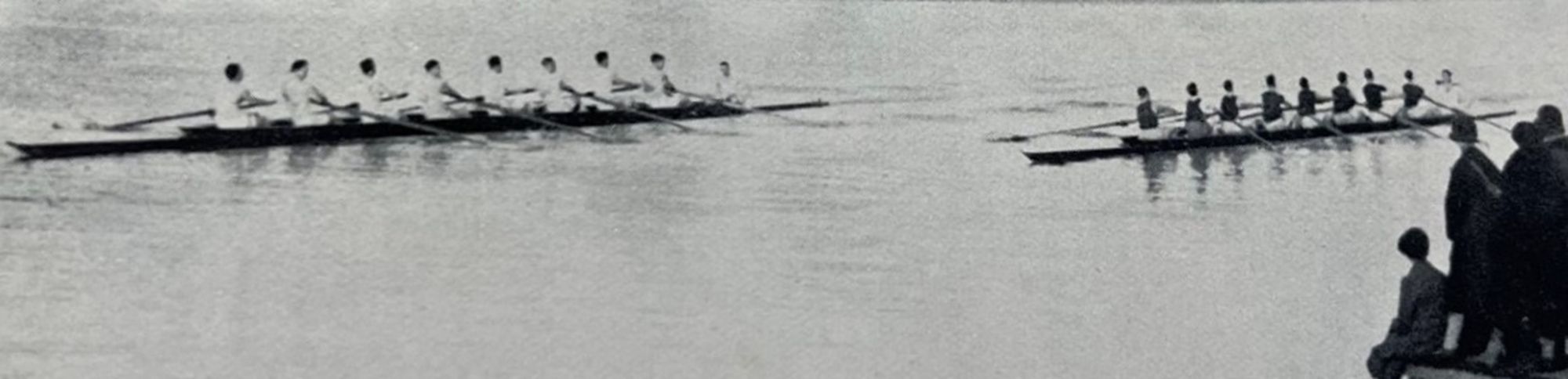
When the Commerce Faculty began, the traditional sports retained an elite status. In 1925, the Faculty’s first rowing crew won the John Grice Shield inter-faculty race. They beat Arts/Law, Science, Medical and Engineers. Thousands watched from the banks of the Yarra River. Russell Keon-Cohen, an elite oarsman, rowed in 'stroke' position alongside coxswain Harold Lanyon, one of the first BCom graduates in 1927.
Commerce had arrived!
Constance Gepp BCom was a founding member of the skiing club in 1932. She raced in intervarsity and inter-dominion competitions and helped to build the Hotham Chalet, with funds and voluntary work.

In the 1930s, commerce student James Peters worked, so he did not have time to train for the footy and cricket teams. This prevented him from playing A grade. The rules were ‘no training, no playing’. At the time, sport was associated with being a gentleman and an amateur. He was not the only student who had to earn money.
All sorts of sports
During and immediately following World War II, older returned soldiers (supported by the Commonwealth Reconstruction program) and migrants were on the campus, and they changed the environment and introduced new sports.
Badminton champion Ong Eng Hong (BCom) was the Australian badminton singles champion in 1955 and shared the doubles title in 1956.

During the 1940s and 50s, there were leading Victorian Football League (VFL) players with a BCom degree. One was Allan Hird, whom the Essendon Hall of Fame recognised for "his foresight, skill and commitment", which "laid the foundations of the successful business that Essendon is today."
Bachelor of Commerce graduate Merv Lincoln also came to prominence in the 1950s, when he became just the third Australian, and 11th person in the world, to break the four-minute-mile barrier.
'Life Be In It’ is a widely recognised lifestyle message in Australia. The brainchild of Brian Dixon (BCom), a former Melbourne Football Club premiership player, it was established when he was Minister for Youth, Sport and Recreation (1973–1982). It continues today as an Australian company.
After first finding victory at the World Student Games in Tokyo in 1967, global athletics champion Ralph Doubell AM (BCom) won a gold medal at the 1968 Mexico Olympics, for the 800-metre race. His record was unbroken for 49 years.
Doubell also won the 800m gold medal at the 1969 Pacific Conference Games.
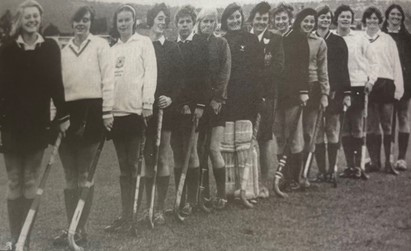
Sue Richardson, her twin sister Joanne, and Robin Alston promoted a scheme for financing women’s overseas touring teams. Richardson is now Emeritus Professor at Flinders University.
During the 1980s, lunchtime exercise was encouraged. The University's 1989 Annual Report estimated that 42,000 staff and students attended aerobics classes during the year.
Non-competitive staff and student fitness activities, such as free yoga, continue.
An example of a commerce sporting family is the Moorfields. Daniel Moorfield (BCom) played for the Melbourne University Blacks in the 1990s, while his son Campbell Moorfield (BCom) plays with the today.

Modern sports
Dylan Alcott (BCom) has won multiple gold medals at the Paralympics in basketball and tennis.
Kaitlyn Ea, a commerce student, won the 2022 Australian women’s doubles title with Gronya Somerville. The pair also won silver at the Oceania Championships.
The Elite Athlete Program (ELP) supports students, such as basketballer and commerce student, Matt Roseby who considers, ‘ELP gives him a better mindset and better perspective on what athletes and academics can offer together and how the university can help you achieve in both’.
Darcy Moore (BCom) captained Collingwood to win the 2023 AFL men's premiership.
Andrew Dillon (BCom LLB), CEO of the AFL, played footy with Old Xaverians Football Club.
Netballer Joanna Weston (BCom) plays for the Vixens and the Diamonds and won a gold medal in the 2024 Paris Olympics.
Aboriginal and Torres Strait Islander students are invited to participate in Moondani Yalingwa, a program designed to help students get fit, make friends, and have fun.
The Sport’s Strategy works to enhance co-curricular student experience through sport and offers the largest co-curricular activity at the university, with over 18,000 students using their programs and facilities annually.
Commerce students have achieved in sport and academics since 1925 and the next century promises to be just as exciting.
More stories
-
Founding of the Faculty
The University of Melbourne has a rich history in economics education, with roots dating back to 1855 when political economy was part of the Bachelor of Arts curriculum, evolving into the establishment of the Faculty of Commerce in 1924 under the leadership of Founding Dean Sir Douglas Copland, amidst both academic and industry debates about the role of commerce in higher education.
-
From sandstone to spots: The buildings of FBE
As the Faculty of Business and Economics celebrates its centenary, the evolution of its buildings—from the iconic Old Commerce to the contemporary Spot—reflects its academic growth.
-
Influence and enrichment: Celebrating FBE contributors
Emeritus Professor Ross William's book 100 Contributors over 100 Years highlights the influential figures who have shaped FBE, showcasing their remarkable contributions to teaching, research, and leadership over the past century.
-
Medicare: The creation of Australia’s most significant health policy
The creation of Medicare stands as a landmark achievement in Australian health policy, stemming from the pioneering research of Richard Scotton and John Deeble at the Melbourne Institute, which transformed the country's healthcare system into a publicly funded insurance model.