Through his work on Indigenous entrepreneurship and management, Dilin Duwa’s Dr Peter Musinguzi hopes to help one of Africa’s oldest surviving Indigenous tribes achieve economic self-determination in the face of population decline.
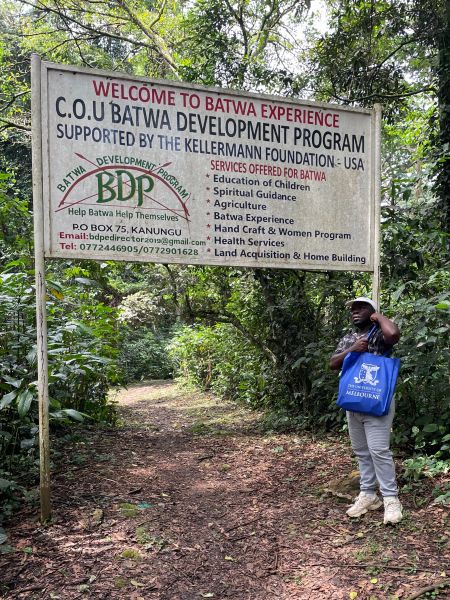
The latest census figures from the Uganda Bureau of Statistics estimate that there has been a 65 per cent population decline of the Batwa people over the last decade.
Dr Musinguzi, a McKenzie Postdoctoral Fellow at the Dilin Duwa Centre for Indigenous Business Leadership, said that without the right programs and policies, there is a high likelihood of their extinction.
Currently travelling through his home country of Uganda, Dr Musinguzi is developing a long-term research engagement plan with the local Indigenous organisations to develop ground-up action research projects that could help halt this alarming development.
“If the situation continues as it is currently, they will disappear,” said Dr Musinguzi. “The establishment of national parks has resulted in the Batwa being evicted from their homes.
“We are now seeing the consequences of those activities in the high mortality rates of the Batwa and corresponding health impacts and other socioeconomic inequalities.”
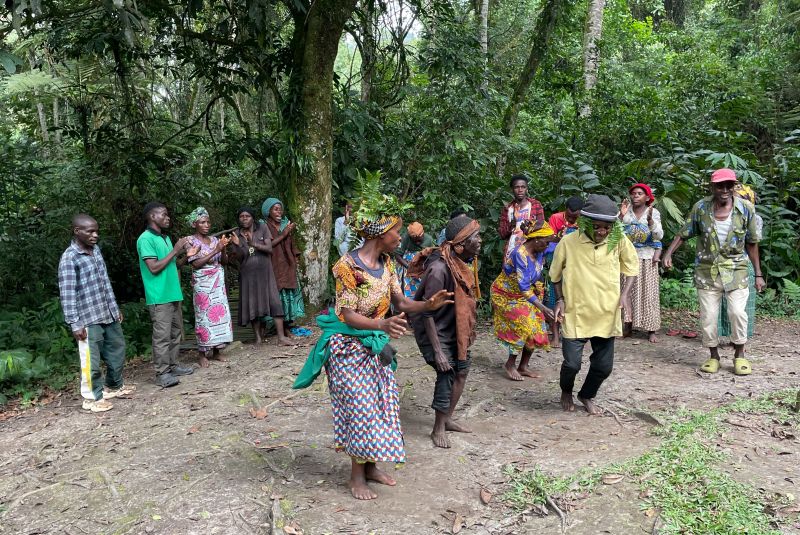
Keepers of the Forest
The Batwa people, also known as the ‘Keepers of the Forest’, have lived in harmony with nature in the equatorial forests of Africa for over 60,000 years, including Bwindi Impenetrable National Park. One of the most biodiverse areas of the world and a World Heritage Site, the park is home to half of the world's population of mountain gorillas, an endangered species.
As hunter-gatherers, the Batwa are widely accepted as the original inhabitants of the area but were displaced in 1991 when Bwindi Impenetrable National Park was established to safeguard the gorilla population.
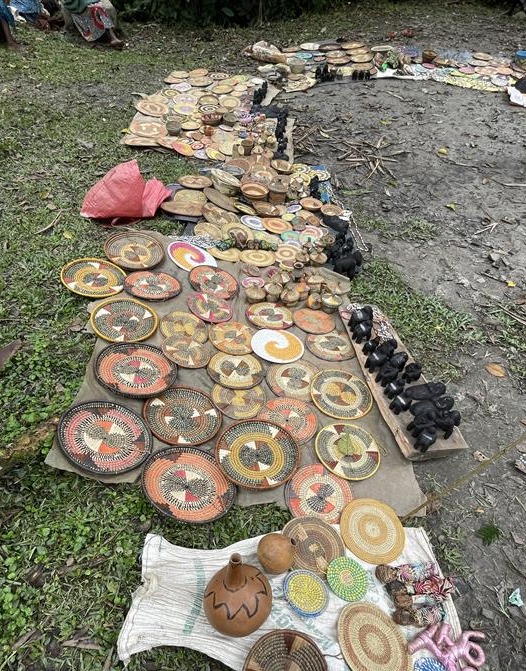
They received no compensation due to a lack of land title and have transitioned into conservation refugees living outside their ancestral lands.
In comparison to other communities, the Batwa experience disproportionately limited access to education and healthcare, limited government representation, high levels of unemployment, and reduced life expectancy.
Their displacement and a lack of an Afrocentric approach in the existing Batwa-focused interventions over the past 30 years has seen their population plummet to under 4000 people (from 6,200 in 2014 to 3,857 in 2024 according to estimations from the 2024 population census report of the Uganda Bureau of Statistics).
“The trauma of being forced from one’s ancestral lands cannot be underestimated. The mortality rate is partly linked to mental health impacts,” said Dr Musinguzi. “We need to construct a life for them out of ancestral lands where they can continue their linkage to their ancestral homes and pass on knowledge to the next generation.”
The Australian experience
Dr Musinguzi said that there are many lessons that can be learnt from the experiences of Australian First Nations people.
“Australian First people have also been taken from their ancestral lands, forced to adopt Western culture and we continue to see the impact of those government policies today. My postdoctoral research at Dilin Duwa has been about exploring how Indigenous people are able to use business to achieve economic self-determination.”
The challenges facing the Batwa are many and their business ecosystem is still at a nascent stage.
“The Batwa indigenous business sector is nowhere near as developed as in Australia and the opportunities are limited. But I have observed that they are involved in various culturally grounded entrepreneurial activities as they strive to adapt to their new life after displacement, displaying agency and resilience. For example, there are Batwa-guided walks, and the income from these activities is shared by the community.”
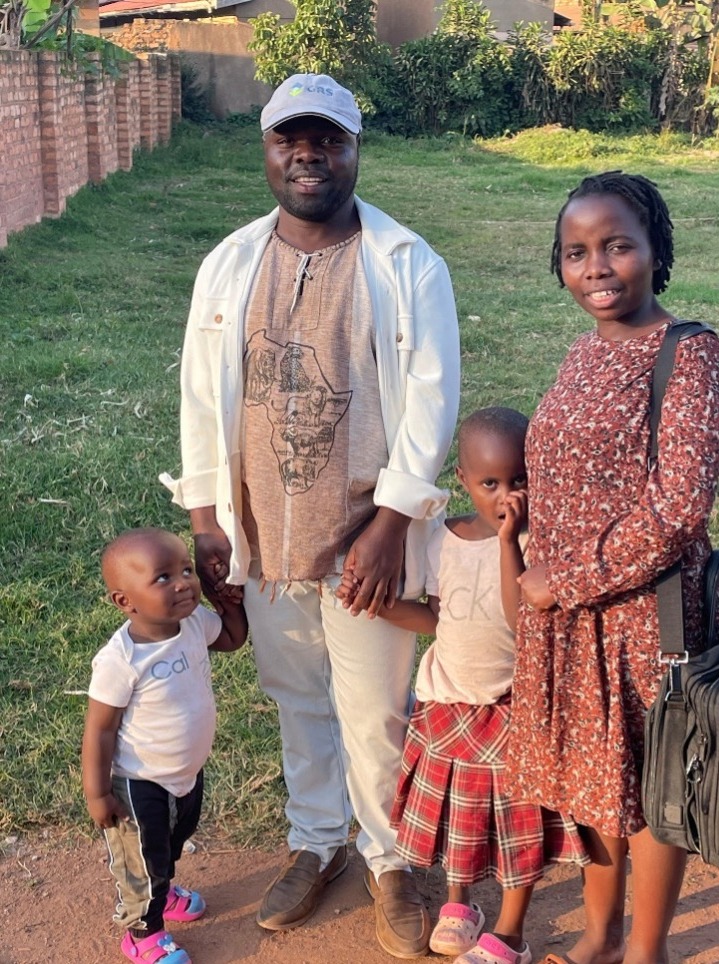
Entrepreneurship and connection to culture – applying an Indigenous research lens
One of Dr Musinguzi’s research projects will explore how Indigenous communities’ entrepreneurial actions could contribute to amelioration of the negative effects of displacement and lead to an understanding of the ways through which the linkage of these people with their past could be enhanced to enable them to maintain their identity and improve their relationships with their new communities in their displaced areas. In turn, this could further enhance their integration and development while maintaining their social, economic and cultural sovereignty.
This study will apply an Indigenous Afrocentric research methodology that includes Batwa community elders and considers the realities of African peoples by doing research based on African ways of seeing reality, values and systems of knowledge.
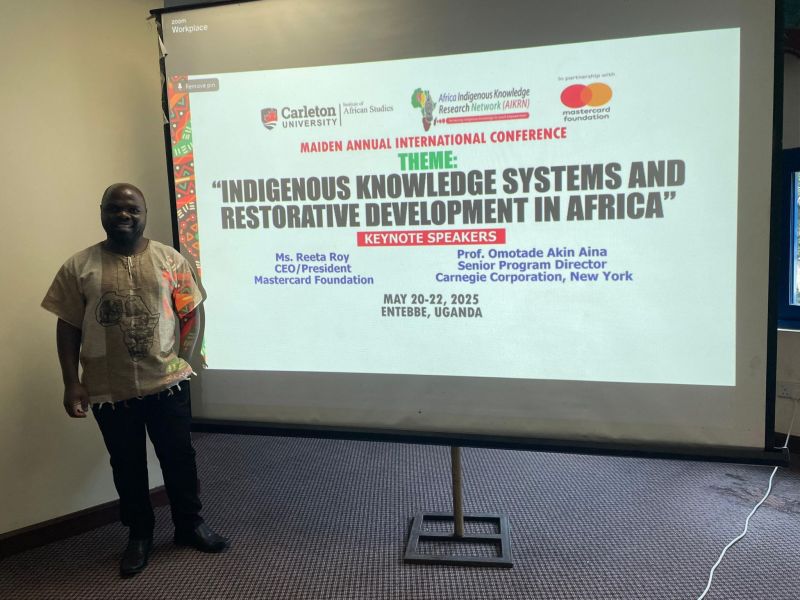
Dr Musinguzi was honoured to present at the Africa Indigenous Knowledge Research Network’s first annual international conference in Entebbe, Uganda in May.
“The conference was established in recognition of the fact that research in Africa has had a very Western-centric lens. Research has always mainly been conducted by Northern researchers with a Western-centric perspective with no sensitivity for African beliefs or African philosophies. And what has happened? All these countless interventions at government, corporate and NGO levels have not effectively worked. Africa is still lagging.”
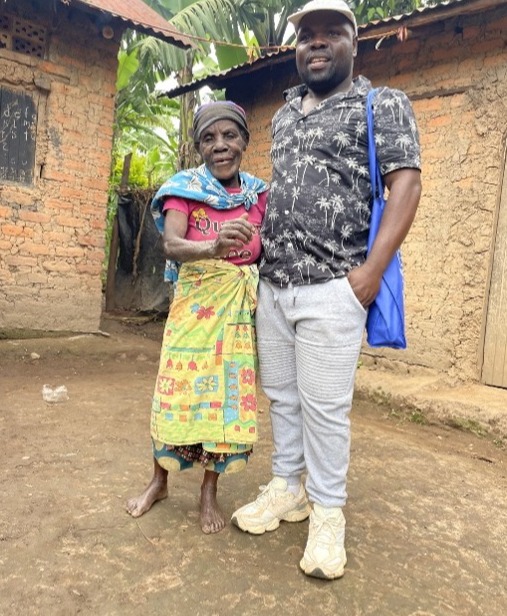
Over the past several weeks, Dr Musinguzi, who is from the Abagyeri clan of the Bakiga people of Uganda, has been meeting tribe members in the first stage of the project.
“I’m lucky in that I speak the same language as the Batwa in Kanungu. So, I have been meeting with amazing community members; from an award-winning Mutwa woman with a bachelor’s degree from a university to a grandmother who has spoken of the impact of displacement to herself individually and also to her community.
“The wisdom, agency and resilience that I have witnessed has been inspiring. The Batwa were able to live with the gorillas for thousands of years and their knowledge of the ecology, including the potential of traditional medicines, is immense. I hope my research can lead to understanding how we can best support the Batwa to continue to live grounded in their culture. It is the oldest continuous culture in my country and there are less than 4000 people left. It would be a tragedy not just for Uganda but for all of us if we fail.”
Get in touch
To find out more or to support Dr Musinguzi’s long-term research engagement plan and this project, please contact Dilin Duwa.
More stories
-
Indigenous research: The gift is both in the content and the process
Dr Dara Kelly-Roy, Dilin Duwa's visiting scholar from Simon Fraser University’s Beedie School of Business in Canada, is addressing the Indigenous knowledge gap through her research.
-
How Māori communities are harnessing their ancient knowledge systems and entrepreneurial spirit to create the next biomedical revolution
Dr Kiri Dell (Ngāti Porou), Associate Dean – Māori, Business School, University of Auckland, is visiting Naarm/Melbourne during Indigenous Business Month as the Dilin Duwa 2024 Visiting Scholar.
-
Dilin Duwa welcomes Senate inquiry recommendation to fund a longitudinal study on the Indigenous-led economy
The Dilin Duwa Centre for Indigenous Business Leadership at the University of Melbourne supports a recommendation for the ongoing funding for a longitudinal study on Indigenous businesses.
-
Indigenous businesses are thriving across a wide range of industries – here’s how to make sure that continues
Greater visibility of these businesses – both in government statistics and Indigenous business directories – would not only showcase their diversity and excellence but also promote further success, writes Associate Professor Michelle Evans for The Conversation.