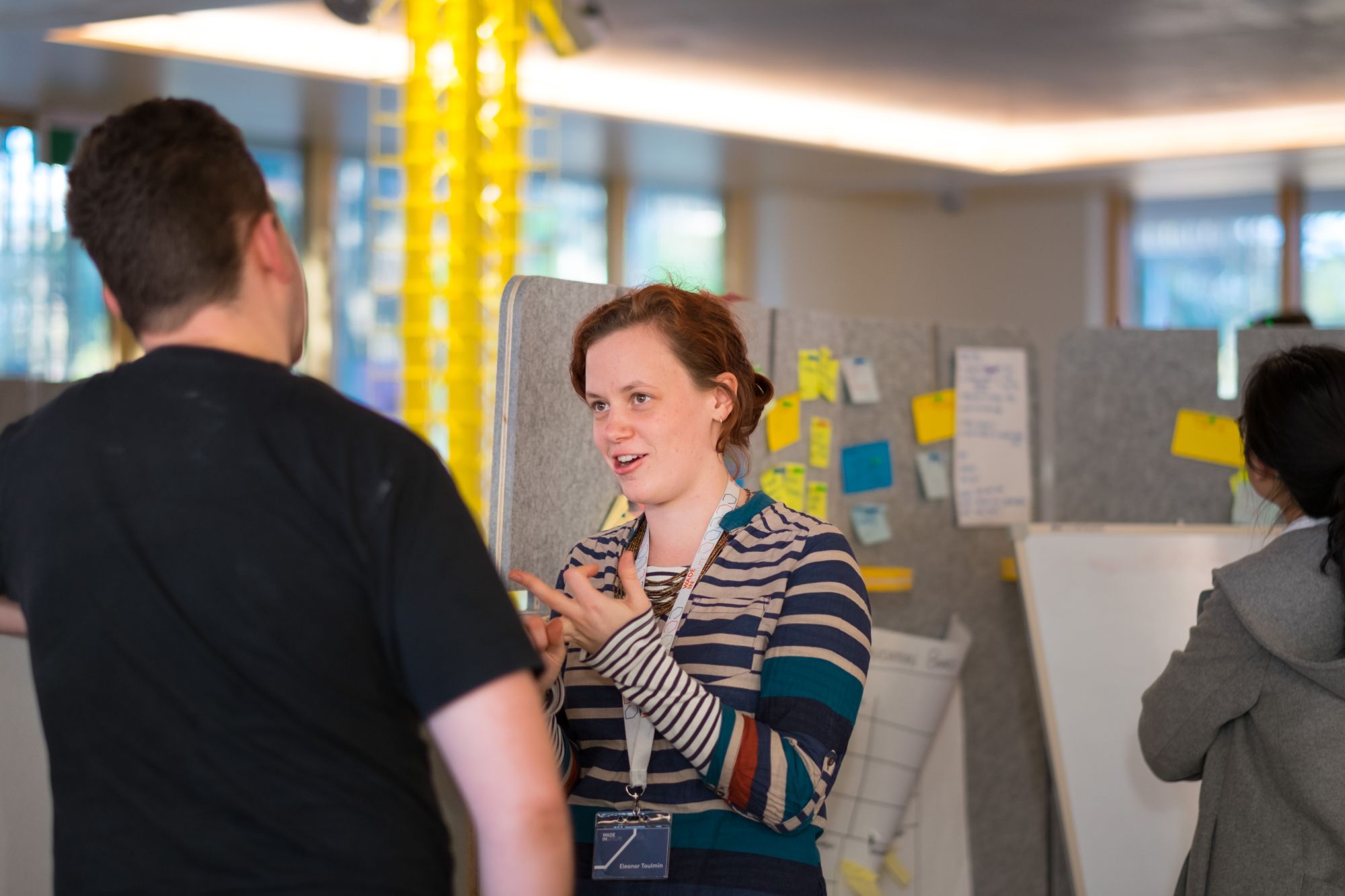
All the startup thrill without the risk factor
When Eleanor Toulmin joined the first cohort of University of Melbourne’s Master of Entrepreneurship in 2016, she wasn’t chasing startup glory – she was escaping an inhospitable work culture. Almost a decade later, she’s found her niche as a right hand to first-time founders, giving startup scaling advice so businesses grow smart and fast.
When Eleanor Toulmin first heard about the Master of Entrepreneurship (MoE) program, she was working as a strategy consultant at KPMG, and hating it. “I loved the work but hated the people,” she says, laughing. “It’s really hard being a smart woman in a space like that. Entrepreneurship felt like a way to be a strategy consultant, without having to put up with … that kind of corporate environment.”
University of Melbourne’s MoE program, co-delivered by Wade Institute of Entrepreneurship, paved the way for a professional pivot. “It helped me shift the direction of my career in a way I don’t think I could have just by myself,” says Eleanor. “I could explore what entrepreneurship meant, how it works in Australia, and explore some ideas.” Embedding herself in Melbourne’s startup ecosystem with the help of warm introductions through Wade proved invaluable, but perhaps the biggest program takeaway was the art of the elevator pitch.
During her year in the program, Eleanor launched MimicTec with fellow MoE student Sarah Last, who had a background in veterinary science. The startup was aimed at improving animal welfare on poultry farms, using robotics to recreate the maternal care chicks lack in commercial settings. The technology showed impressive results in weight gain, feed efficiency and mortality rates, but after $1m raised, trials with Inghams and Hazeldenes, and three years of hard work, Eleanor came to the conclusion that they were running what probably should have been a scientific experiment as a startup. Farmers needed data proof that MimicTec couldn’t provide within a commercial framework. After three years, Eleanor was “worn-out” and left the business in 2019, but it continued for another 18 months.
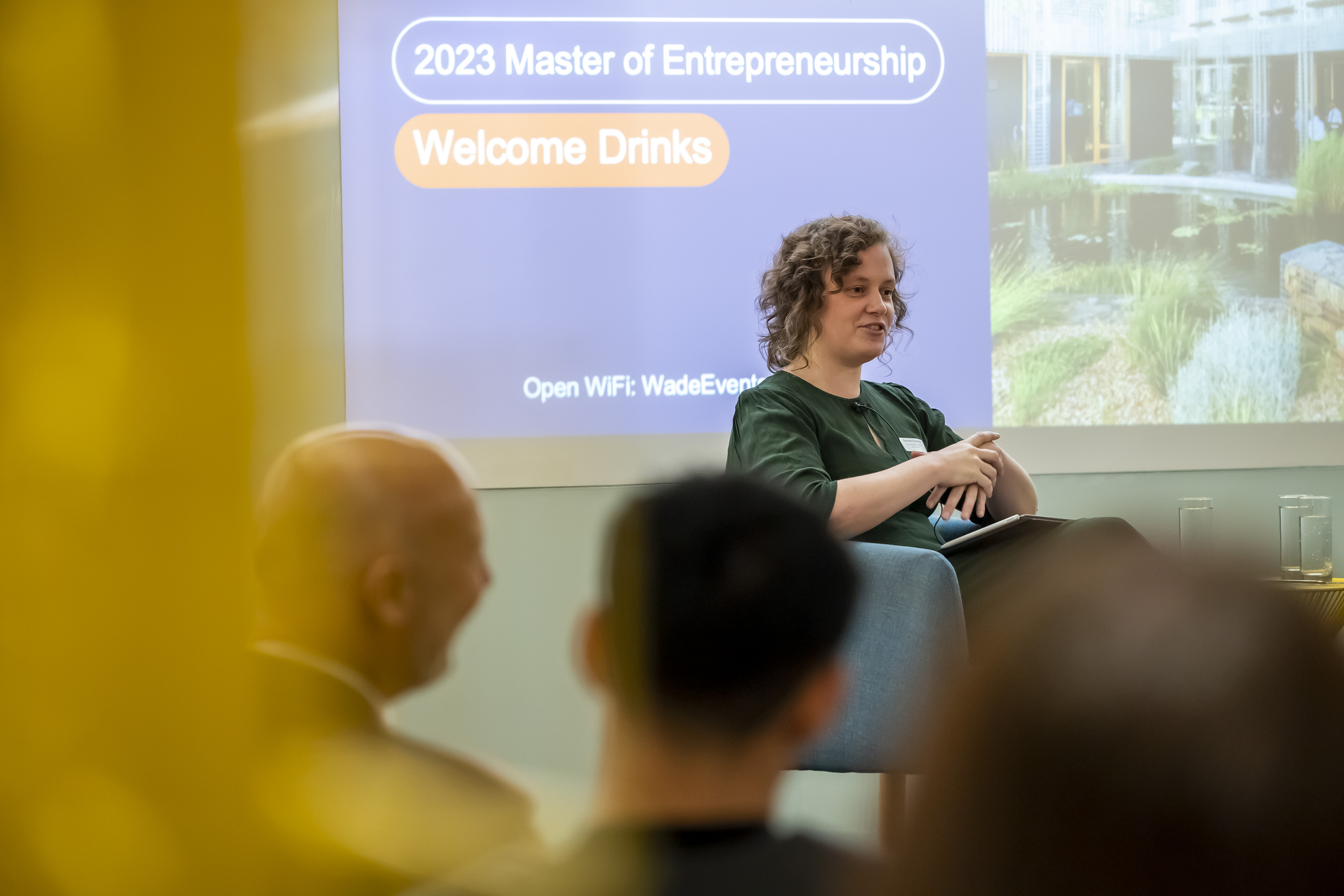
Still, that experience did nothing to dull the appeal of entrepreneurship. “Life is there to be lived,” she says, “to try things out.” Eleanor took her hard-won wisdom into a different kind of entrepreneurial role, as an operator. A friend introduced her to the founders of Melbourne software startup Buildkite, and she became the first non-engineering hire, asking basic questions like, “Do we have a business plan?” and “Do we have insurance?” She spent four years “building up the back end of the company” and ended up Chief of Staff to the CEO. As Buildkite grew from eight people to 140, Eleanor helped oversee two $25 million fundraising rounds and an acquisition.
After that “dream startup journey”, Eleanor wanted to do it all over again, so she joined software company Factor House last year. As Chief of Staff – essentially a deputy to the founders – she draws on her own startup experience to help the founders solve familiar problems. “Being a founder can be very lonely,” she says. “You get decision fatigue … and you’re essentially carrying 15 people’s careers on your back. A Chief of Staff can bring a level of maturity and visibility that first-time founders may not intuitively have.”
The role is misunderstood and more common in both politics and the US, but Eleanor says it can be a powerful one. She helps identify pitfalls, delegate tasks and keep the founders focused on what matters most. The job offers the thrill of entrepreneurship with much less pressure and personal risk than being a founder yourself: “You’re sitting next to the founder every day, so you get all of the excitement, the opportunity, the visibility, without necessarily it being your neck on the line.”
Entrepreneurship, she says, isn’t just about being a founder. “Startups are one of the few places where you get to build something and make a huge difference to the world,” she says. “Not many people get the opportunity to do that.”
The University of Melbourne’s Master of Entrepreneurship is designed to support the development of new businesses, products, services, or processes, creating value and generating new revenue growth through entrepreneurial thought and action. The program is co-delivered by the University of Melbourne and Wade Institute of Entrepreneurship.