James ‘Jim’ Cairns (1914–2003)
BCom (1947), MCom (1950), PhD (1957)
James 'Jim' Cairns, a former policeman turned politician, is best known for his leadership in the 1970s anti-war moratoriums and his role as Treasurer and Deputy Prime Minister in the Whitlam government.
A policeman turned politician, James ‘Jim’ Cairns is remembered by many for his championing of the anti-war moratoriums in the 1970s and his time as Treasurer and Deputy Prime Minister in the Whitlam-led Labor Government.
Before his highly publicised political career, Cairns was a student and teacher in the early decades of the Faculty of Business and Economics, and a leading activist in student, staff, and community political movements.
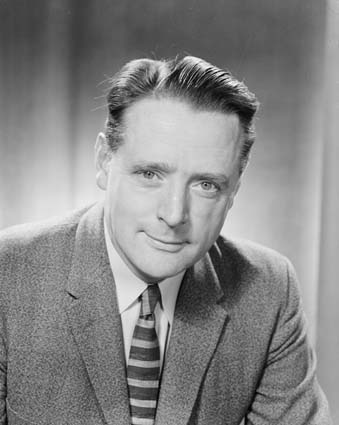
James ‘Jim’ Cairns was brought up on a small farm in Sunbury (just outside of Melbourne), but despite his family’s entrenchment in the Depression-era working class, his parents ensured he gained a secondary education at Northcote High School.
After leaving high school, Cairns’s family needed financial support, and in 1935 he joined the police force.
While policing, he studied part time at the University of Melbourne, attending night lectures to eventually earn a Graduate Diploma in Commerce with honours in 1941. He was the first policeman in Victoria with a university qualification, although he would leave the police in 1944 to enlist in the Australian infantry.
His military service led him to South-East Asia, where he observed Indonesia’s independence movement, developing a lifelong commitment to the maintenance of harmonious and respectful relationships between Australia and Asia.
Academic life
After returning home to Melbourne, he came back to the University, earning a Bachelor of Commerce (Honours) in 1946. A growing interest in academia drove his ambition, and he believed social scientists had a responsibility to bring fundamental change to the economic order.
Accepting a tutoring position at the University in 1946, he was one of just two full-time staff alongside Associate Professor Burton. He applied to join the popular Melbourne University Communist Club, but was rejected from the Australian Communist Party due to his police background.
Following this, Cairns joined the Australian Labor Party (ALP). While at the University, he was an executive member of the Staff Association, helping them win salary increases, as well as the founding president of the University’s Australia-Overseas club.
During this time, Cairns received a Nuffield scholarship to Oxford University before returning to Melbourne as senior lecturer. After completing his doctorate, he became just the second person to earn a PhD with the Faculty.
Public office and the spotlight
Cairns left the University in 1955 after winning a federal seat as the Labor Member for Yarra.
He very quickly established himself as leader among the left-leaning members of the Labor Party. Alongside Gough Whitlam, Cairns challenged the party’s immigration policy in 1951, demonstrating early opposition to the White Australia Policy.
Cairns also joined with other community and political leaders and developed a grassroots movement against Australia’s military role in Vietnam. These ‘moratoriums’ saw a quarter of a million across Australia peacefully protest.
After 27 years out of government, the ALP won the 1972 election, and Cairns was appointed Minister for Overseas Trade and Minister for Secondary Industry. Notably, his pioneering visits to China resulted in increased Australian trade with China.
In 1974 he won the Deputy Leadership and was appointed Treasurer. As acting PM, he was lauded for his strong practical empathetic handling of the aftermath from the Cyclone Tracy devastation.
During the next twelve months, accusations from critics flew at Cairns over his financial management and the Labor Party’s overall ability to govern.
The final straw would come with what is now known as the Loans affair, leading to his dismissal from Cabinet. Just a few months later in 1975, the entire government was dismissed by the Governor-General.
Cairns after politics
Cairns resigned from politics in 1977 and was made a life member of the Labor Party in 2000. Since leaving parliament he practiced alternative lifestyles, sharing his experiences in personal development.
In his last interview, Cairns was introduced by the ABC as “a man who overcame childhood adversity to become in turn a champion athlete, a respected police detective, a university lecturer, a leader of one of the great popular movements of twentieth century Australian political life, a Cabinet Minister, Acting Prime Minister – and latterly, a writer, thinker, and neighbourhood intellectual.”
Jim Cairns died in 2003. At his funeral, Cairns's friend and cabinet colleague, Tom Uren, described him as a “a great Australian”.
More stories
-
Vi Peterson
Vi Le Peterson is a pioneering global influencer who broke barriers in the male-dominated banking industry, served as Australia’s Senior Trade Diplomat in Vietnam, and established a philanthropic foundation dedicated to child injury prevention, all while advocating for community engagement and impactful leadership.
-
Sir Douglas Copland (1894–1971)
Sir Douglas Copland, the Foundation Dean of the Faculty of Commerce at the University of Melbourne, was an influential figure in academia, government, and international diplomacy, renowned for his role in shaping Australia's economic landscape, particularly during WWII.
-
Richard Burnet
Richard Burnet, the Global CEO and Director of Body Fit Training (BFT), has made a significant mark on Australia’s fitness industry through his innovative approach to group training, all while prioritising his family.
-
Elizabeth Muriel ‘Betty’ Lawson (1920–2008)
Betty Lawson is revered as one of Victoria’s leading advocates for teachers in the state.